"It's like 'we are not them - we are us'. So we have to jump to prove that we are not one of them." That is how Argentine journalist Nicolas Rotnitzsky explains the cultural force behind the chants that will define Argentina's World Cup semi-final against England. For one nation, this is identity. For the other, it is sport. As the teams prepare to meet in 2026, the gap between those two framings will be harder to bridge than any tactical adjustment.
The chants that outlast the match
The song is simple: "For the Malvinas, for Diego, for Leo's last one." At Argentine football stadiums and rock concerts alike, supporters have long chanted another refrain: "And now you see, and now you see, whoever doesn't jump is English!" It reads as tribal, but Rotnitzsky clarifies what it really is: "It's part of the Argentine culture."
That cultural expression is rooted in a specific moment of national memory. The 1982 Falklands War lasted 74 days and claimed 907 lives: 649 Argentine military personnel, 255 British military, and 3 Falkland Islanders. Forty-four years later, that loss still shapes how Argentines speak about England. The chant is not a call for violence. Rotnitzsky is explicit: "It's not about hate, not at all." Instead, it is a statement of national distinction. It is a way of saying who Argentina is by defining who it is not.
De Paul, Argentina's midfielder, confirms the sentiment. The chants are "very much about our heroes," he says. Those heroes span generations: soldiers lost in the Falklands, players who wore the blue and white and became legends. The chant links them all in one moment of collective memory.
Maradona's ghost and Messi's final act
If the Falklands define the historical shadow of this rivalry, Diego Maradona defines its mythology. In 1986, at Mexico City's Azteca Stadium, Maradona scored both goals in Argentina's 2-1 quarter-final victory over England. The first of those goals remains one of football's most contested moments. His hand carried the ball into the net. The referee allowed it. The goal stood. Maradona called it the "Hand of God."
That moment became Argentina's victory and England's wound. It also became the template for how Argentines imagine beating England: not as equals, but as agents of a greater historical narrative. "The game is hugely significant and brings back a lot of memories because of what Diego did," De Paul reflects.
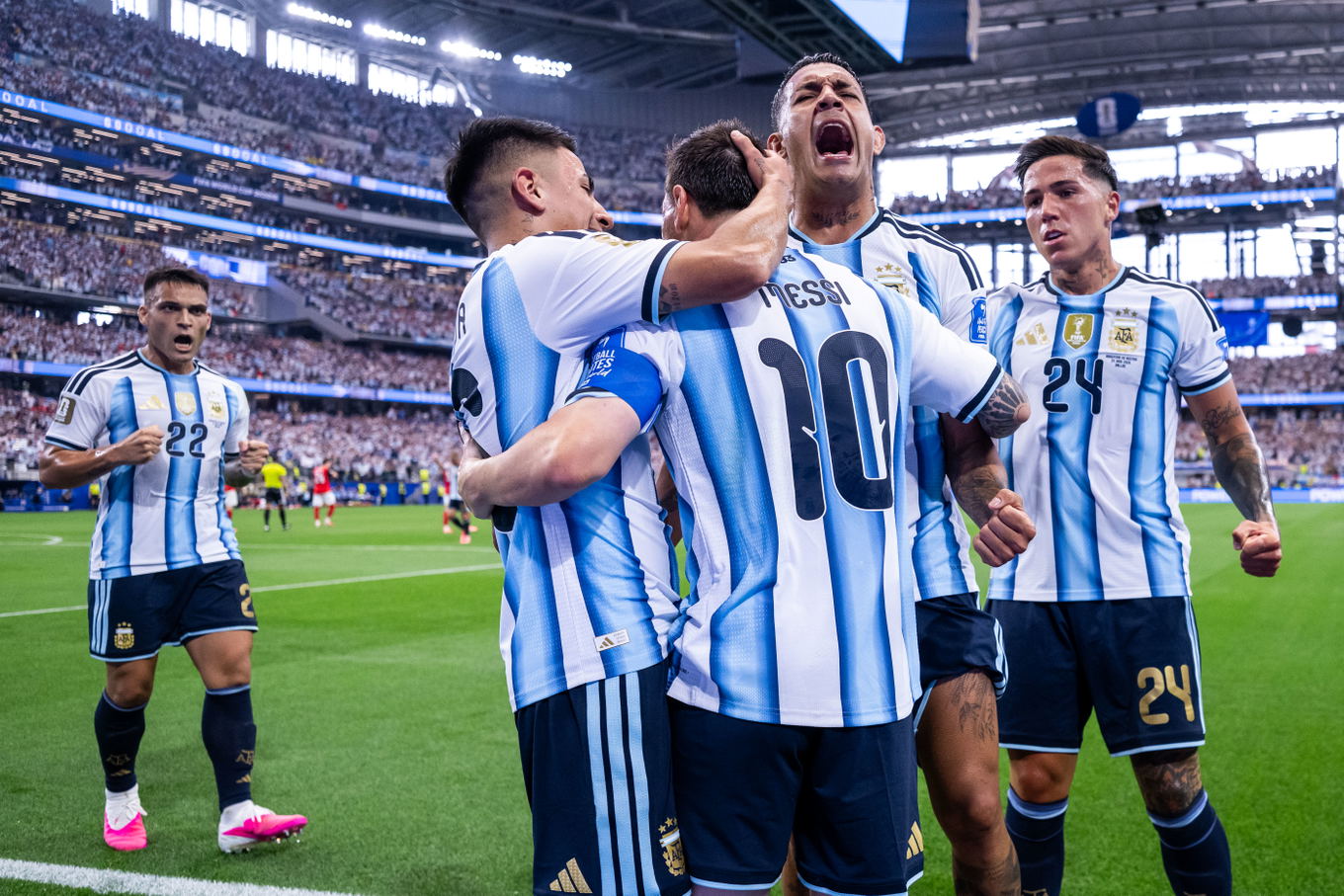
Now, another legend stands on the edge of this rivalry. Lionel Messi has scored 8 goals across 6 World Cup 2026 appearances, arriving at the semi-final in what Argentina and its supporters expect may be his final tournament. The chant has already been written: "For Leo's last one." The expectation is not subtle. For a nation that has spent decades living in the shadow of Maradona's triumph, the chance to give Messi a defining moment against England in his potential last tournament carries weight that no friendly could match.
What England sees
England has a different view. Goalkeeper Jordan Pickford framed it plainly: the match is "just a game of football." His logic follows: "Football will do its talking."
De Paul does not entirely disagree. He acknowledges the tension: "We have to understand that this is a football match and that the Malvinas issue needs to be discussed elsewhere." The contest will be decided on the pitch by execution, not by history or identity or the weight of 44 years of national memory.
England arrives in peak form, having won 4 of their last 5 World Cup 2026 matches. Argentina has won all 4 of their most recent matches, moving through the tournament with complete control. Both teams are at their peak. Both are ready.
But one team carries more than football into this semi-final. For Argentina, every goal will mean something beyond sport. For England, every save will be just what it is: a football moment. When the whistle blows, both framings will be valid. When the final whistle sounds, only the result will matter.
FAQ
Why do Argentina fans chant about the Falklands in football matches?
Argentina's chants about the Falklands and the 1982 war that claimed 907 lives are rooted in national identity, not hatred. Argentine journalist Nicolas Rotnitzsky explains the mindset: "It's like 'we are not them - we are us'. So we have to jump to prove that we are not one of them." The chants honor those lost in the war and define Argentine culture. As midfielder Rodrigo de Paul says, they are "very much about our heroes" spanning generations.
What is the Maradona Hand of God moment against England?
In the 1986 World Cup quarter-final at Mexico City's Azteca Stadium, Diego Maradona scored both goals in Argentina's 2-1 victory over England. His first goal, scored with his hand, became iconic. Maradona called it the "Hand of God." The referee allowed it, and the goal stood—a moment that became Argentina's triumph and England's wound, defining this rivalry for decades.
Is Argentina vs England just a football match?
For England, yes. Goalkeeper Jordan Pickford calls it "just a game of football." But for Argentina, the match carries profound cultural weight tied to the Falklands War, Maradona's legacy, and national identity. The chant encapsulates it: "For the Malvinas, for Diego, for Leo's last one," referring to Lionel Messi's potential final tournament. Both perspectives are valid, but the result will be decided on the pitch.
Written by Jack Mercer with AI-assisted research, cross-checked against 2 outlets. How we work →