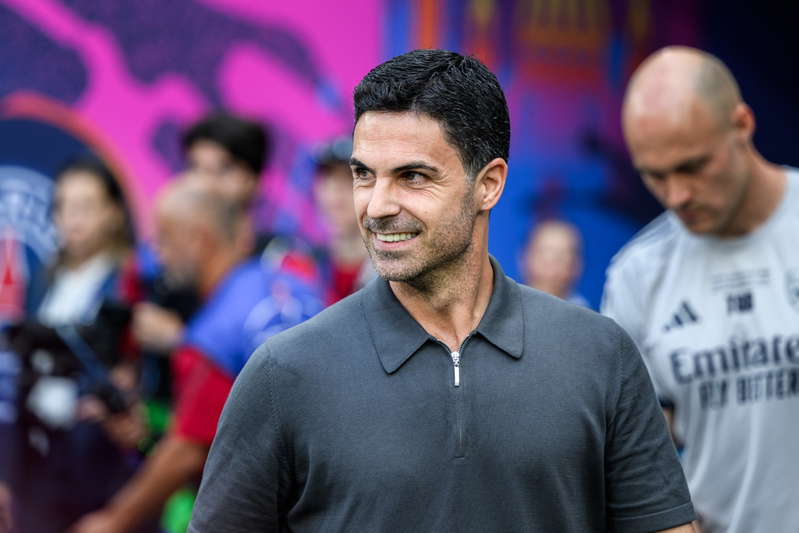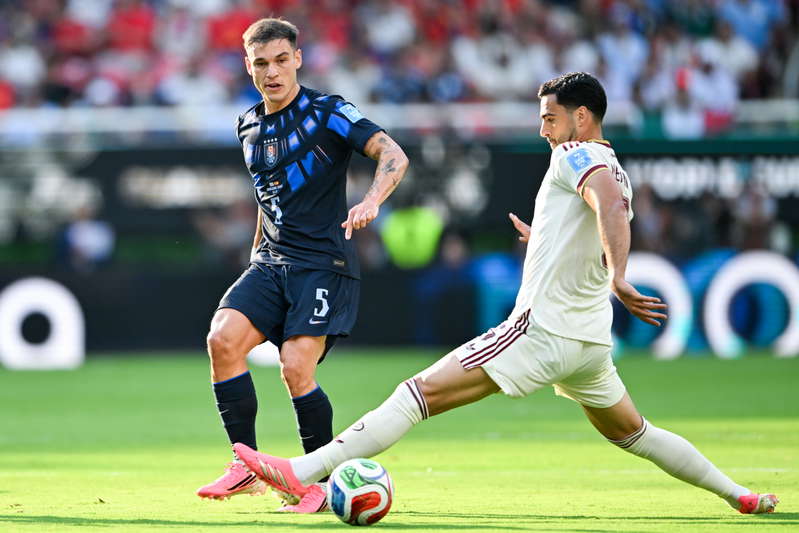


Arsenal had the perfect start in the Champions League final when Kai Havertz scored in the 6th minute. That should have given Mikel Arteta's side control. Instead, they spent most of the night protecting the lead, gave Paris Saint Germain territory and eventually paid for a vulnerable right side before losing 4-3 on penalties after goalless extra time.
Why Arsenal's shape became a problem
The result should not be reduced to a simple collapse. Arsenal were compact for long stretches and made PSG work for every opening. Luis Enrique told goal.com: "They are strong physically, they know how to defend and it was very tough."
That part is true. Arsenal were not outplayed from the first whistle to the last. But their approach still left them with very little margin for error.
The clearest number is possession. Arsenal had 24.7%, the lowest by a team in a Champions League final on record since 2003-04. PSG had 75.3%, which turned the game into a long defensive job rather than anything close to an even contest.
That is where the criticism of Arteta's caution has weight. Once Havertz put Arsenal ahead, the game became about surviving pressure instead of pushing PSG back. The brief also states Arsenal failed to produce a shot on target after the 6th minute, which tells its own story. An early lead is useful, but you still need some threat to stop the game tilting entirely toward your own box.
Arsenal's set-piece threat also never rescued them. The sources point out that set pieces were a major strength in their Premier League title win, when they scored 18 goals from them, a league record. In this final, though, that edge barely surfaced when it was needed most. Arsenal earned a late corner in stoppage time, but Noni Madueke's delivery was cleared and the scramble came to nothing.
How PSG found the weak spot
The decisive problem sat on Arsenal's right. Cristhian Mosquera, a centre-back by trade, was used as a third-choice right-back option and the brief says he had made only five previous competitive appearances there. Against Khvicha Kvaratskhelia, that was always a risk.
Mosquera's numbers reflect a rough evening rather than a total disaster. He won 3 tackles. He was still rated 6.2 and lasted only 66 minutes before Arsenal changed that side. PSG kept testing the same channel until it broke.
The key moment came in the 65th minute, when Ousmane Dembélé equalised from the penalty spot. The brief links that goal directly to PSG's work down Arsenal's right, with Kvaratskhelia drawing the foul that changed the game.
That is why the match feels more tactical than random, even with penalties deciding the trophy. The shootout settled it officially, but PSG had already shifted the balance by forcing Arsenal deeper and targeting the area Arsenal were least equipped to defend.
There is still room for the other reading of the final. Arsenal were difficult to break down, led early and stayed in the contest all the way through extra time. But the stronger explanation is that their conservative shape and weak point at right-back gave PSG exactly the kind of game they wanted: one long siege, one exposed flank, and eventually one penalty to reset the night.
What mattered more than the shootout
Penalty defeats are easy to treat as coin flips. This one was not that simple. Arsenal had already drifted into a game defined by defending, hanging on and waiting for a set piece that never arrived.
Jurriën Timber's absence from the right side was felt because Arsenal did not have a natural answer there, and Mosquera was asked to do a job the brief makes clear was not his usual role. PSG did not need to dominate with constant clear chances. They just needed to keep pressing on the same weakness until the final changed shape.
So yes, the contest ended 4-3 on penalties after extra time finished goalless. But if you are looking for why Arsenal lost the final, the bigger answer sits in the 120 minutes before that: an early goal from Kai Havertz, a very deep block, and a right side Paris Saint Germain eventually turned into their route back into the match.
FAQ
Why did Arsenal lose to PSG in the Champions League final?
The brief points to three main reasons: Arsenal spent long periods in a deep block, their right side was exposed with Cristhian Mosquera filling in at right-back, and their usual set-piece threat never delivered a late winner. PSG then equalised through Ousmane Dembele's 65th-minute penalty and won 4-3 in the shootout after goalless extra time.
Was Arsenal too defensive against PSG in the final?
Arsenal's caution is a fair criticism. They scored in the 6th minute through Kai Havertz, then played much of the game in a compact, low-possession shape. Their 24.7% possession was the lowest by a team in a Champions League final on record since 2003-04, which supports the view that they protected the lead rather than trying to control the game.
How much did Cristhian Mosquera struggle for Arsenal against PSG?
Mosquera had a difficult night. The brief says the 21-year-old Spaniard had made only five previous competitive appearances at right-back, and PSG targeted that side. He recorded a 6.2 rating, won 3 tackles and was withdrawn after 66 minutes. Khvicha Kvaratskhelia also drew the foul that led to PSG's equalising penalty from that flank.
Were Arsenal actually worse than PSG for the whole final?
Not for the whole match. The sources say Arsenal were compact and competitive for long stretches, especially after Havertz scored in the 6th minute, and Luis Enrique admitted PSG found them very tough to break down. But the balance shifted as the game wore on, with PSG controlling 75.3% of possession and Arsenal failing to produce a shot on target after the opening goal.
Written by Jack Mercer with AI-assisted research, cross-checked against 7 outlets. How we work →