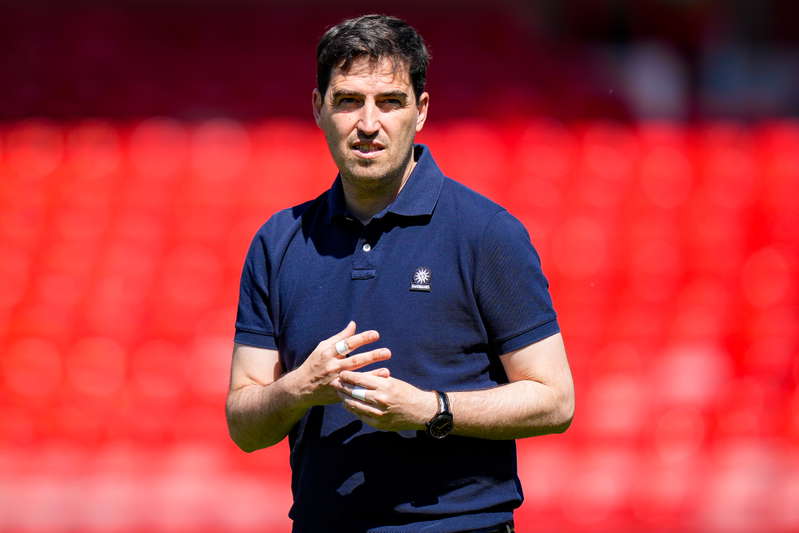


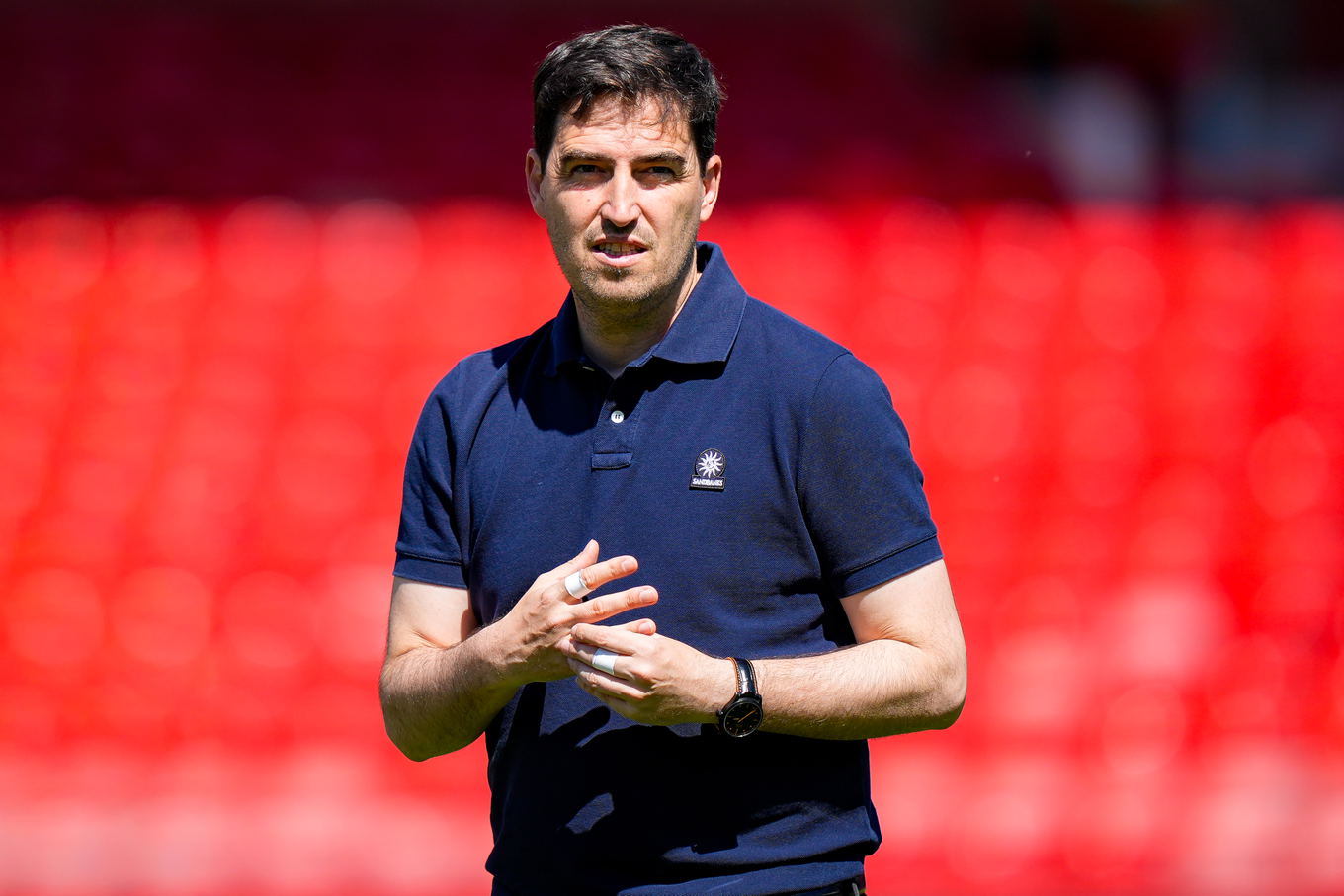
Bournemouth finished sixth in the Premier League and will play in the Europa League after Andoni Iraola's final season in charge. That is the headline of his exit, not the mechanics of a 1-1 draw at Nottingham Forest. Iraola leaves after failing to agree a new deal, with a team that changed its style, set a new high for consistency and gave the club its best finish in the modern top flight.
He sounded like a manager who knew exactly how good the ending was. Speaking to bbc.co.uk, Iraola said: "The Champagne is in the changing room, we were celebrating like we should".
What Iraola changed at Bournemouth
The most important part of this spell is not just where Bournemouth finished, but what they became. Iraola said himself that the brief from the club was bigger than results alone: "The first thing from the club was more than the results, changing the style, changing the approach, being more offensive and proactive - that's why they signed me".
That tracks with how this team has been discussed all season. The shift was toward a more front-foot version of Bournemouth, and the league position gives that idea proper weight. Sixth place is not a respectable mid-table finish dressed up as progress. It is European qualification.
There is also a clear sense that this did not happen instantly. Bournemouth went 11 Premier League games without a win between November and January, and that stretch could easily have flattened the project. Instead, the season bent the other way.
Dominic Solanke summed up the early struggle neatly when he told bbc.co.uk: "We couldn't take in all the information at first". That matters, because it explains why the campaign looks stronger in hindsight than it did in winter. Iraola's methods seem to have needed time, but once the team absorbed them, the shape of the season changed.
Why the finish matters more than the farewell
By the end, Bournemouth had put together a 17-game unbeaten run in the top flight, a club record in this division. That is a serious marker of stability, especially for a side that had already come through a long winless stretch earlier in the campaign.
Their final five league results in the stats pack are listed as DWWDW, which fits the wider picture. They did not stumble into Europe with one hot week. They closed the season looking hard to beat and good enough to stay in the top-six conversation.
The draws total is part of the story too. Bournemouth recorded 17 league draws, which helps explain both the consistency and why they did not finish even higher. It is a useful detail because it stops the season being overstated. This was not dominance. It was a very well-built campaign that kept producing points.
There is one awkward detail around the final tally. The feature source describes this as a club-record 57-point season, while the stats database records Bournemouth on 56 points. That discrepancy has to be acknowledged as it stands. What is not in doubt is the broader outcome: sixth place, Europa League qualification and the club's best Premier League finish.
Iraola also seemed to recognise that the ending landed as cleanly as he could have hoped. He told bbc.co.uk: "I am quite hard but I have been really close [to tears]. I cannot ask for much more. I have been so lucky to be in this moment with this group at players with this club. I think it is the perfect ending and I am so thankful."
The successor inherits more than a league place
There is a temptation to frame this as a neat farewell built on the final day, but that misses the point. The more convincing reading is that Iraola leaves Bournemouth in a better state than he found them: clearer in style, stronger in league standing and with European football next season.
That matters because managerial exits often come with loose ends. This one comes with a platform. The club and Iraola could not agree a new deal, but his last season still delivered a return that most clubs of this size would take immediately.
If the points total is eventually settled as 56 or 57, it will not change the main judgement on his work. Iraola leaves with Bournemouth in sixth and in the Europa League, and his successor starts from there.
FAQ
Why is Andoni Iraola's Bournemouth spell being seen as such a success?
Because Bournemouth finished sixth in the Premier League and qualified for the Europa League in Iraola's final season. He also said the club hired him to change the style, making the team more offensive and proactive, and Bournemouth ended the campaign with a club-record 17-game unbeaten run in the top flight.
Did Bournemouth qualify for Europe because of the draw at Nottingham Forest?
No. The final-day 1-1 draw at Nottingham Forest was part of the ending, but the qualification story was built across the season. Bournemouth finished sixth, and the article's evidence points to the broader league campaign rather than the draw alone as the reason they reached the Europa League.
How did Bournemouth improve under Andoni Iraola after their bad run?
Bournemouth had an 11-game Premier League winless spell between November and January, but the team improved once Iraola's ideas settled. Dominic Solanke said, "We couldn't take in all the information at first," and Bournemouth later put together a club-record 17-game unbeaten run in the top flight.
Did Bournemouth finish on 56 or 57 points under Andoni Iraola?
Both numbers appear in the source material. The feature report describes a club-record 57-point season, while the stats database records Bournemouth on 56 points. The safer conclusion is that Iraola left with Bournemouth in sixth and in the Europa League, even if the final points total is disputed.
Written by Jack Mercer with AI-assisted research, cross-checked against 1 outlet. How we work →