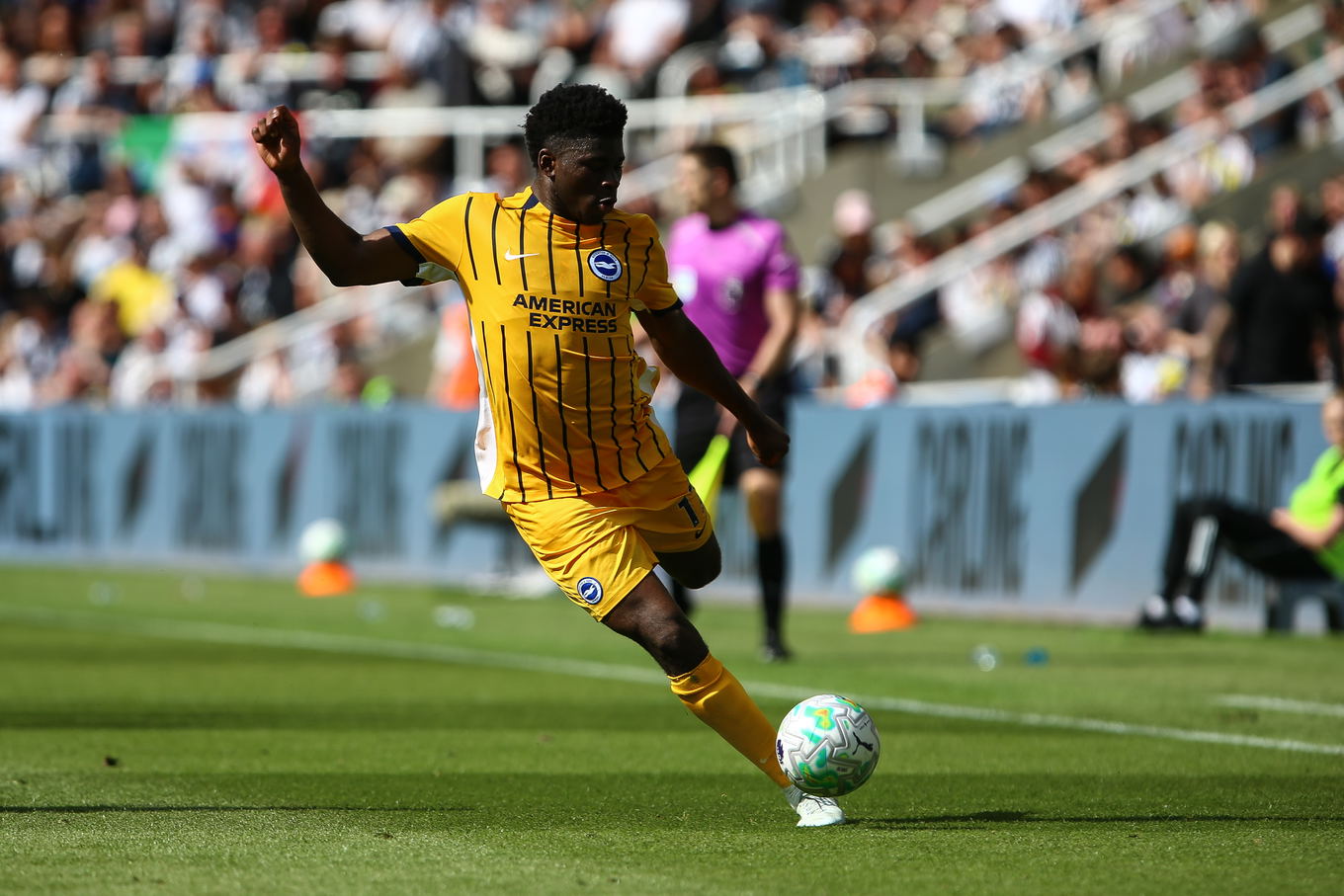
Manchester United have committed £65m up front plus £5m in add-ons for Carlos Baleba, and the clearest explanation sits in his Brighton numbers. Last season he won 107 possessions in the middle third, made 197 ball recoveries and averaged 6.7 progressive carries per 90. United have bought a midfielder who can win the ball, cover space and carry it out himself, which is a far more precise need than simply signing another central player.
The numbers United are buying
Baleba's case is built on work without the ball first. He ranked fourth among Premier League midfielders for possessions won in the middle third with 107, and fourth again for interceptions with 46. That is the profile of a player who steps into danger early rather than waiting for play to come to him.
The recovery volume is just as important. He was fifth among Premier League midfielders for ball recoveries with 197 and seventh for duels won with 199. United have lacked that mix of reach and repeatability in midfield, especially when games turn loose and stretched.
What lifts him above a pure destroyer is what happens after the regain. Baleba averaged 6.7 progressive carries per 90 in 2024-25 and hit a top speed of 34.5km/h. So this is not only about tackles and second balls. It is also about a midfielder who can take possession in traffic and move the team up the pitch himself.
He played 31 Premier League matches last season and leaves Brighton with 112 appearances overall, which helps explain why Jason Wilcox described him, quoted by independent.co.uk, as "an elite midfielder with immense potential to develop further. He brings a unique combination of qualities that will really complement our squad."
That combination is why the creativity debate misses the point a little. United did not need Baleba to arrive as a final-third specialist. They needed a midfielder whose best work starts 10 or 15 yards earlier, by stopping transitions, recovering loose balls and carrying the team into safer territory.
The fee and the longer chase
The price has been framed two ways since the deal broke. Some reports shorten it to £70m, but the verified structure is £65m guaranteed with a further £5m in add-ons. With a fee at that level, the scrutiny is obvious.
United had been on him for almost 12 months, according to Sky Sports, and made an enquiry in the January transfer window as well. That longer chase matters more than the shorthand headline fee because it suggests this was a targeted move rather than a late-market reaction.
Sky Sports also reported that Brighton wanted more than £100m when United first tried to sign Baleba last year, and that the move only went ahead after his form dipped. Even with that backdrop, the statistical case for the transfer still looks strong enough. The ball-winning output remained elite, and that is the part of his game United are paying for most heavily.
There is another layer here, though. Baleba is currently sidelined with an ankle injury, and Sky Sports says he could be back by mid-September, while other reports are less specific and only say he is injured. So the signing answers a squad need, but it may not solve an immediate selection problem on day one.
United's midfield rebuild under Carrick
Baleba is United's third midfield addition of the summer after Andrey Santos and Youri Tielemans. That gives Michael Carrick a much broader set of midfield options than one straight replacement move would have done.
The overall spend is contested in its wording too. The Independent says Santos and Tielemans cost £48m and £35m respectively, putting the midfield overhaul at £148m. Other reports do not total the incoming fees in exactly the same way, and United's summer spend to date is also listed at £153m elsewhere. The firmer conclusion is that this has been a major rebuild, and Baleba is the signing who adds the most obvious ball-winning and recovery profile.
Baleba himself pointed to the coach when the move was confirmed. Quoted by bbc.co.uk, he said: "I cannot wait to work with Michael Carrick. His experience and knowledge of the game make him the perfect coach to help me to reach the highest level."
United will hope that partnership starts soon, but the main point of the deal is already clear. Baleba's best Brighton numbers show a midfielder built for regains, duels and carries, and that is exactly the gap United have spent £65m plus £5m in add-ons trying to fill.
FAQ
Why did Manchester United sign Carlos Baleba from Brighton?
United signed Baleba for the midfield traits they have lacked. Last season he ranked fourth among Premier League midfielders for possessions won in the middle third with 107 and interceptions with 46. He was also fifth for ball recoveries with 197, seventh for duels won with 199, and averaged 6.7 progressive carries per 90.
Is Carlos Baleba a creative midfielder or more of a ball-winner?
The case for Baleba is built far more on ball-winning, recovery runs and carrying the ball forward than on creativity. His standout numbers from Brighton were 107 middle-third possessions won, 46 interceptions, 197 recoveries, 199 duels won and 6.7 progressive carries per 90, plus a top speed of 34.5km/h.
How much did Manchester United pay for Carlos Baleba?
The verified structure is £65m up front plus £5m in add-ons, rather than a flat £70m fee. Some reports shorten that to £70m, but the more accurate reading is the guaranteed amount plus bonuses.
How does Carlos Baleba fit into Manchester United's midfield rebuild?
Baleba is United's third midfield addition of the summer after Andrey Santos and Youri Tielemans. The Independent put the combined midfield spend at £148m, though other reports do not total the fees in exactly the same way. His profile adds ball-winning and carrying to a group that now has more than one midfield option.
Written by Jack Mercer with AI-assisted research, cross-checked against 7 outlets. How we work →