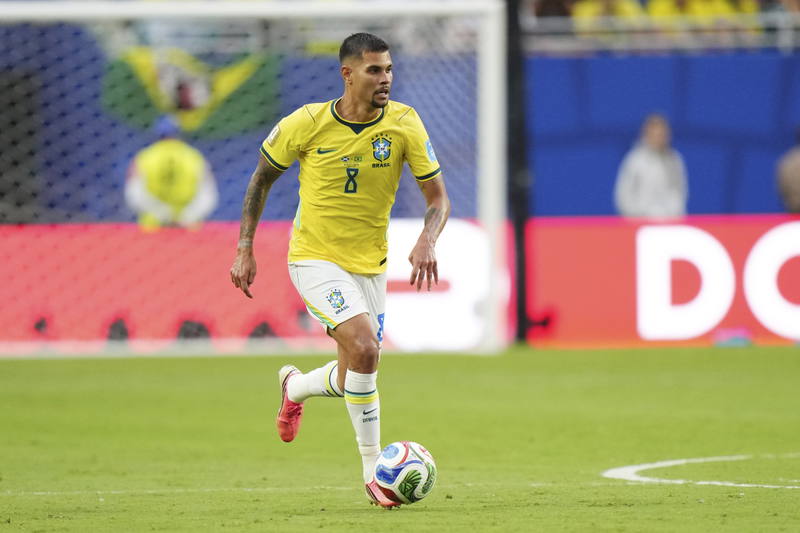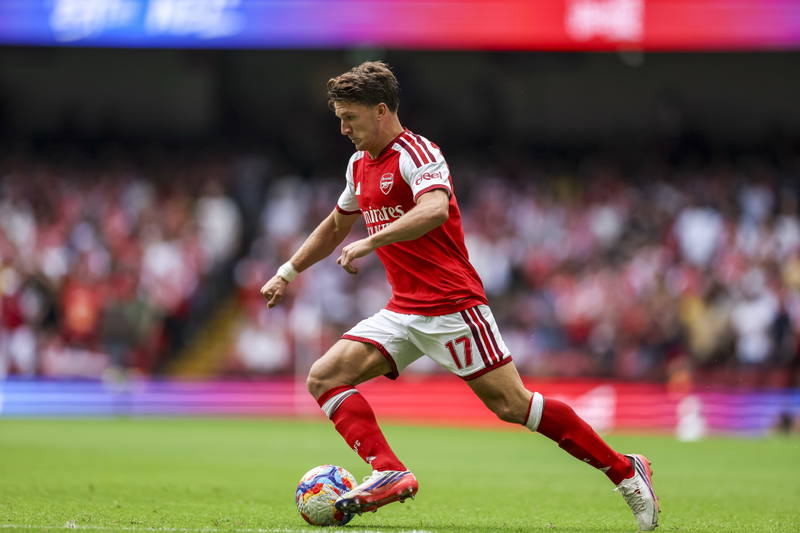
Arsenal have completed the signing of Christos Tzolis from Club Brugge KV for £34m, a record transfer in Belgian Pro League history. The Greek winger arrives as a direct replacement for Leandro Trossard, who departed for Besiktas in a £17m deal. The move solidifies Arsenal's forward depth as the Premier League champions pursue a second consecutive title and push deeper into European competition.
A carefully matched replacement
The logic behind Tzolis is straightforward: he mirrors Trossard's profile in nearly every measurable way. Both are left-sided wingers capable of playing centrally. Both have injury records that border on remarkable for modern football—durability that matters in a squad expected to compete across four competitions. Both combine goal-scoring threat with the competitive temperament Mikel Arteta has made central to Arsenal's culture.
Trossard played all 38 of Arsenal's Premier League matches this season, an exemplary availability record. Tzolis' absence count at Club Brugge tells a similar story: his longest injury lay-off was 2 matches, sustained despite playing through a gruelling Champions League schedule. That consistency, maintained across multiple games per week over an entire season, speaks to professionalism that extends beyond raw talent.
Tzolis recorded 51 goal contributions in 52 matches for Club Brugge last season—17 goals and 23 assists in 36 Belgian league appearances, plus 4 goals and 7 assists in European competition. The volume is impossible to ignore, and it caught Arsenal's attention for good reason.
Numbers in context
Yet those numbers demand careful reading. Belgium's Pro League ranks eighth across Europe's major competitions, and Club Brugge's European showing underscores the gap between their domestic dominance and elite-level play. The club finished 19th in their Champions League group with 10 points from 8 matches, offering limited support to their best player and little margin for error.
Tzolis' recent Champions League form offers a preview of the step up. Across five appearances for Brugge between November 2025 and February 2026, he averaged a rating of 6.9, with 1 goal in 82 minutes—respectable but not dominant. The elite competition exposes the difference between dominating a secondary league and thriving in European football's highest tier.
Hayk Milkon, Club Brugge's assistant manager, outlined why Tzolis struggled to replicate his domestic form in Europe. "He's able to fulfil different roles," Milkon told Sky Sports. "Coming from the left side—giving him this space to start wide and then find the moments to get more inside—that's where he's at his strongest. But he's always strongest the closer he is to the goal."
That versatility is genuine. Tzolis can operate as a genuine winger or shift inside, creating a positional flexibility that suits Arteta's fluid attacking systems. Yet the same qualities that made him lethal against Belgian Pro League defences may be neutralised by the compactness and tactical sophistication of Premier League opponents.
Warrior mentality and consistency
Beyond statistics, Milkon emphasised something less quantifiable but no less valuable: Tzolis' mentality. "When we go on the pitch, he's immediately in warrior mode. Every single training session is to win," Milkon said. "And outside the pitch, he's just the most amazing guy that you can have in a dressing room."
That balance—fierce competitor on the pitch, team player off it—is exactly what Arsenal sought in replacing Trossard. Arteta has built a dressing room where intensity and professionalism are non-negotiable, and Tzolis' reputation suggests he fits that culture.
Milkon also highlighted the physical foundation underpinning those contributions: "He runs a lot of kilometres in the game, but also at high speeds and his sprint distance. Anyone can do that once in a week. He was doing it every three or four days with the Champions League. And his performances stayed stable. He also takes care of his body really well. He's a super professional."
What comes next
Arsenal's immediate challenge is integration. The club finished the 2025-26 Premier League season with 85 points from 38 matches, establishing themselves as champions. They lead their Champions League group with 24 points from 8 wins, already qualified for the knockout stage with games to spare. That position of strength means Tzolis' arrival is an investment in depth, not desperation—but depth that will be tested quickly.
His early performances will dictate how Arsenal approach the remainder of the season. If Tzolis adapts rapidly to the Premier League's intensity and tactical demand, he becomes a significant asset in the title race. If his form stalls against elite opposition, Arsenal's reliance on squad rotation and parallel competitions will reveal gaps that needed addressing. Either way, the club has secured a calculated replacement for a player who embodied their winning standard. Whether that standard translates across the divide between the Belgian Pro League and English football's elite will become clear soon enough.
FAQ
Why did Arsenal sign Christos Tzolis?
Arsenal signed Tzolis for £34m to replace departing winger Leandro Trossard. Both players share similar profiles—left-sided versatility, exemplary injury records, and the competitive temperament Mikel Arteta values. Tzolis recorded 51 goal contributions in 52 matches for Club Brugge last season.
How does Christos Tzolis compare to Leandro Trossard?
Both are versatile left-sided wingers with exceptional durability. Trossard played 38 of 38 Premier League matches this season; Tzolis' longest injury absence at Brugge was 2 matches despite a gruelling Champions League schedule. Tzolis recorded 51 contributions in 52 matches; Trossard contributed regularly for Arsenal before his £17m move to Besiktas.
Will Christos Tzolis's Belgian league numbers translate to the Premier League?
That remains uncertain. Tzolis' 51 goal contributions came in Belgium's eighth-ranked league. His recent Champions League form offers mixed signals: he averaged 6.9 across five appearances with one goal in 82 minutes, suggesting elite European competition is a step up. His work rate and professionalism—maintained across demanding schedules—suggests adaptability.
What is Christos Tzolis's playing style?
Tzolis plays best when drifting infield from the left, capable of both wide and central positions. Club Brugge assistant manager Hayk Milkon noted his strength comes from proximity to goal. He combines a powerful shot with positional flexibility and elite-level intensity, maintaining consistent performance across tight fixture schedules.
Written by Jack Mercer with AI-assisted research, cross-checked against 5 outlets. How we work →