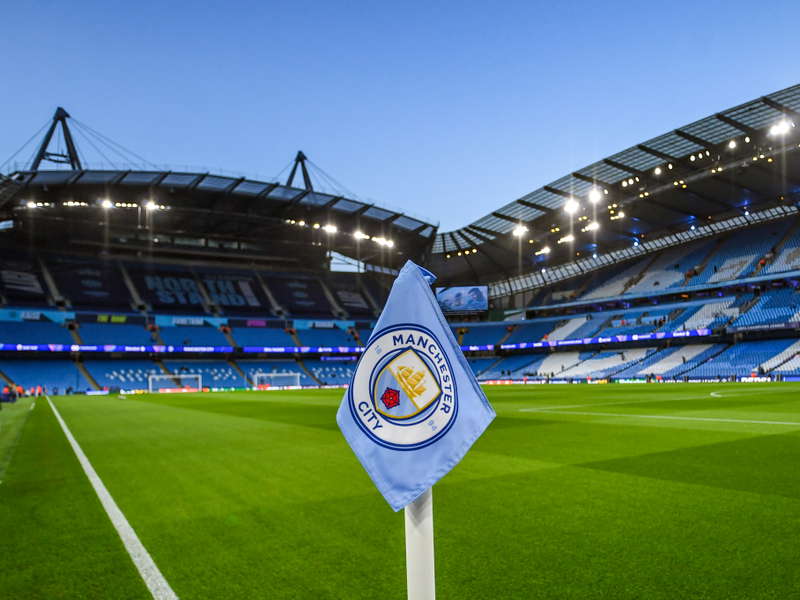


At 16 years old, Cavan Sullivan has already done something few U.S. men's soccer players ever achieve: he scored in the Conacaf Champions Cup. He is also the eighth-youngest goalscorer in MLS history. More improbably, his future is locked in. The midfielder at Philadelphia Union is pre-signed to Manchester City and will move to the Premier League when he turns 18.
Sullivan is not alone. Across Bundesliga, MLS, and elite European loan systems, five young Americans are developing the technical depth and competitive experience that could reshape the USMNT by 2030. The emergence matters because the U.S. team has long lacked depth in Europe's top divisions. These prospects suggest the pattern is shifting.
But the pipeline is fragile. Dual-national eligibilities complicate commitment. And the prospect pool is small enough that any derailment costs the national team measurably.
Development across continents
Noahkai Banks has 31 first-team appearances for FC Augsburg, starting 20 of the club's 34 Bundesliga matches. At 19, he is past prospect status - he is competing regularly in Germany's top division. In February, he earned a 7.9 rating in a full 90 minutes against Hoffenheim, contributing an assist from center back. Across five recent appearances, he averaged a 6.7 rating, ranging from 5.6 to 7.9 as he fights for consistent starts in a ninth-place team with 43 points from 34 matches.
Yet there is friction. Banks holds dual eligibility to both the USMNT and Germany, and has maintained U.S. Soccer in his Instagram bio for months without formally committing to the senior team. Germany is actively recruiting. "If Noahkai Banks had made a decision, there's a very good chance he would've been on the roster this summer," Ben Steiner of Sports Illustrated noted. The delay is costly.
J. Hall, 18, also developed through MLS at New York Red Bulls, already in his fourth season. Before age 16, New Jersey labor regulations forced him to leave matches at halftime and forbade play after 7 p.m. - a unique constraint no international peer faces. More immediately, Hall is eligible to represent Poland through his mother, and Poland has begun recruiting him. "The big question, though, is whether the USMNT can get him into the Stars and Stripes as the Polish national team, for which he is eligible through his mother, has already begun recruiting," Steiner noted.
Sullivan's path is simpler. He is progressing through MLS but his destination is secured. Ben Steiner argued that "while he's already impressed with the youth national teams, expect him to get a chance in the near future and to develop into a key piece by 2030."
Two more round out the five: Zavier Gozo at Real Salt Lake and Diego Kochen, 20, now on loan at Danish club Lyngby from Barcelona, seeking regular first-team football.
The next 18 months
Five prospects is not a deep roster. Development is nonlinear - injuries, loans, form shifts, and selection politics all intervene. More pressingly, three hold dual eligibility. The word "could" matters. None of them is guaranteed.
By 2026, Sullivan will have moved to Manchester City. Banks' USMNT commitment will likely be settled. Hall's Polish recruitment will either succeed or fail. Kochen will return from his loan. The next 18 months determine whether the USMNT can retain its emerging depth through dual eligibility, regulatory quirks, and simple randomness.
Written by Jack Mercer with AI-assisted research, cross-checked against 1 outlet. How we work →