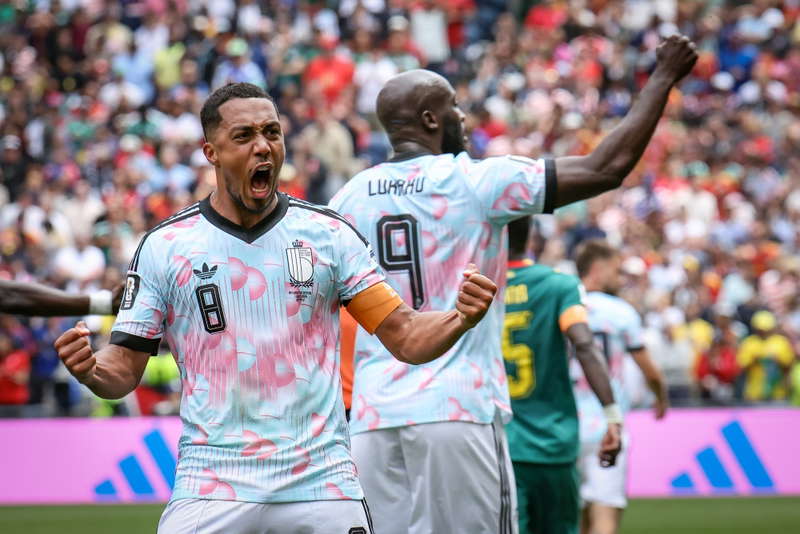


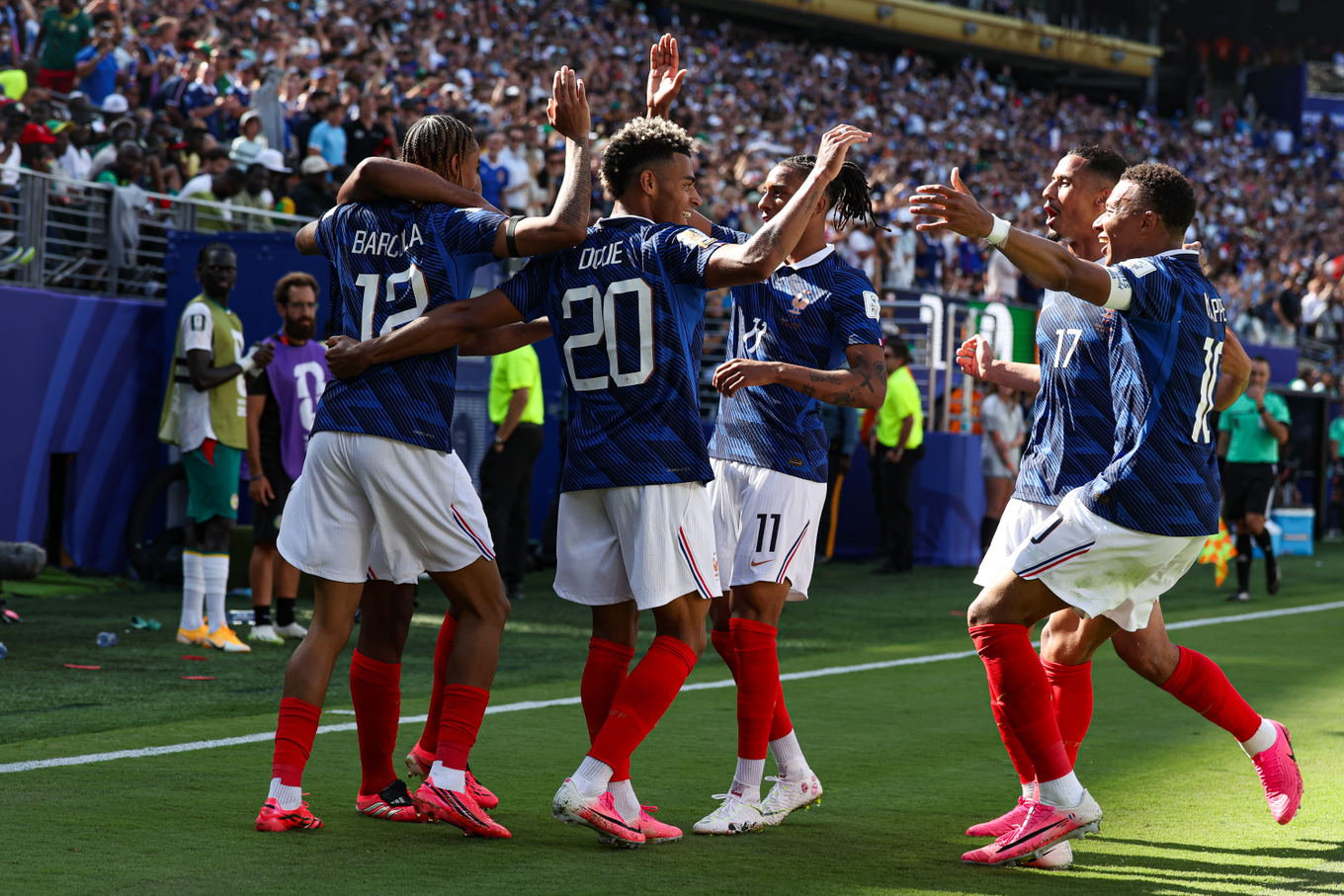
Didier Deschamps has named his 26-man France squad for the 2026 World Cup, and the obvious headline is the attacking talent. Kylian Mbappé and Ousmane Dembélé give France elite firepower, but Deschamps made it clear this squad was not chosen as a simple collection of the biggest names. The real question is how that talent fits together, especially with Eduardo Camavinga left out.
Deschamps told bbc.co.uk: "It's a squad. Not necessarily the 26 best players. It's about balance and how the team comes together."
That is the line that matters most. France have enough attacking quality to be discussed among the stronger teams in the tournament, but this squad announcement also shows Deschamps is still selecting for function first.
Why balance is the real issue in this squad
There is no shortage of quality at the top end. Mbappé goes into the tournament after scoring 24 goals in 28 appearances across all competitions for Real Madrid in 2025. He also posted an 8.05 Champions League rating in that period. For his country, only Olivier Giroud, with 57 goals, has scored more than Mbappé's 56.
Dembélé is hardly a secondary figure in this discussion. He scored 10 league goals and 7 Champions League goals for Paris Saint Germain in 2025, numbers that explain why any shape built around him carries weight. If Deschamps wants threat, he has it.
The complication is obvious enough. Emmanuel Petit put it bluntly when he told caughtoffside.com: "Mbappe is playing up front as a striker. Dembele is playing up front as a striker. Ask Didier Deschamps, the French manager, 'Who is going to play?'"
That is a fair challenge, not least because Deschamps' own comments point in the same direction. When a manager says balance matters more than simply choosing the 26 best players, he is admitting that hierarchy alone does not solve the front line.
Petit has a clear preference. He wants Mbappé on the left, Dembélé through the middle and Michael Olise on the right. The logic is backed by Olise's output too, with 19 assists in the Bundesliga in 2025 and a 7.87 rating. That does not mean Deschamps must follow Petit, but it does underline how much of this squad debate comes down to role definition rather than raw talent.
Why Camavinga's omission stands out
The biggest absence is Eduardo Camavinga. In a squad full of established names, his omission is still the one that jars.
Deschamps did not dress it up. He told bbc.co.uk: "I can imagine how disappointed [Camavinga] must be. He's coming off a tough season where he didn't play as much and suffered injuries. [But] I've got decisions to make and a squad to put together."
That makes this harder to frame as a pure tactical snub. The season context and injury issues are clearly part of the decision. At the same time, Deschamps is still making a squad-balance call, because he said as much about the whole group. Both explanations can sit together, and they probably do here.
The omission also sharpens the wider point about how Deschamps sees this tournament. He is not picking on reputation. He is trying to shape a group that works.
What France's attack gives Deschamps, and what it still leaves unresolved
There is enough in the numbers to understand why France will still be viewed as one of the more dangerous sides in the competition. Mbappé scored in three of his last five matches and averaged 7.3 across that run. Dembélé arrives off a season strong enough to keep him central to any serious conversation about France's best attack.
But the favourites tag should be handled carefully. Some outlets have pushed France as expected group winners, while the reporting and comment around Deschamps' selection has focused more on unresolved fit than certainty. That feels closer to the truth. The talent is there. The structure is still the question.
Petit went further than that, saying on caughtoffside.com: "If you do like that, I'm pretty sure France will win the World Cup. If you don't do that and you want to go the same way that Madrid has been doing with Kylian Mbappe then you're going to have trouble. Egos in the dressing room will come out, and the trouble will start in the team."
That should be treated as opinion, not prediction dressed up as fact. Still, the warning lands because it connects to the same point Deschamps raised himself: balance. You can argue about Petit's preferred solution, but not about the problem he is pointing at.
France open their campaign against Senegal in New Jersey on 16 June. By then, Deschamps will have to do more than announce a star-studded squad. He will need to show how Mbappé, Dembélé and the rest actually fit into one team.
FAQ
Why did Didier Deschamps say the France World Cup squad is about balance rather than the 26 best players?
Deschamps said his 26-man squad was built around balance and how the team comes together, not simply picking the 26 biggest names. That frames the main issue around how France fit Kylian Mbappé, Ousmane Dembélé and the rest into a coherent attack rather than just stacking talent.
Why was Eduardo Camavinga left out of the France World Cup squad?
Deschamps said Eduardo Camavinga was coming off a tough season in which he did not play as much and suffered injuries. He also made clear it was part of a wider squad-selection decision. That means the omission is better explained by season form, fitness and balance than by any single reason.
Can France make Mbappé and Dembélé work in the same front line?
They can, but it is the biggest selection question in the squad. Emmanuel Petit argued Mbappé should play on the left and Dembélé through the middle, with Michael Olise on the right. Deschamps has not set it out that bluntly, but his own comments about balance suggest the same issue sits at the centre of France's build.
How good is France's attack heading into the 2026 World Cup?
The attacking numbers are strong. Mbappé scored 24 goals in 28 appearances across all competitions for Real Madrid in 2025, and only Olivier Giroud has scored more goals for France than his 56. Dembélé also arrives in form after 10 league goals and 7 Champions League goals for Paris Saint Germain in 2025.
Written by Sam Whitfield with AI-assisted research, cross-checked against 4 outlets. How we work →