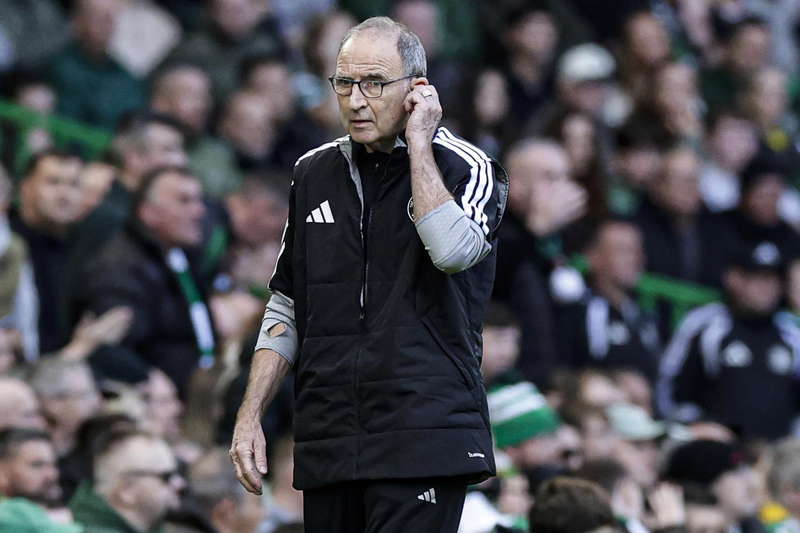


Marvin Bartley has been appointed Stenhousemuir manager, and the timing gives the move more edge than a routine summer change. He is back on the touchline after leaving Livingston, and he will face his former club next month. That sits alongside a bigger task at his new club, with Stenhousemuir preparing to play second-tier football for the first time since 1975.
Bartley is now the main story because this is both a new start and an awkwardly quick reunion. BBC Sport reported that "Marvin Bartley has been appointed Stenhousemuir manager and will come up against former club Livingston next month." There is not much settling-in time when the first standout fixture carries that kind of backdrop.
He also arrives with his recent exit from Livingston still fresh. Speaking to BBC Sport, Bartley said he and Neil Hastings had "had no option but to resign" after the club's relegation from the Premiership. That line matters because it explains why this job feels less like a quiet reset and more like a return under scrutiny.
Why the Livingston link shapes this appointment
Bartley can be described in two ways right now, as the new Stenhousemuir manager and as the former Livingston manager. Both are relevant. The appointment is the news, but his Livingston spell is impossible to separate from it because the reunion is already on the calendar and the circumstances of his departure were not neutral.
Livingston finished 12th in the Premiership before Bartley's exit, and that gives the move its immediate context. It would be wrong to load that entirely onto him, but it would be just as wrong to pretend it is background noise. When a manager leaves a relegated club and takes another job soon after, the previous role follows him into the next one.
That is especially true here because Bartley himself put a clear edge on the departure. Saying he and Neil Hastings "had no option but to resign" was not the language of a manager drifting away at the end of a cycle. It suggested a break that still carries some feeling. Facing Livingston next month means that part of the story returns almost immediately.
There is also a practical football point underneath the obvious narrative. Early fixtures often shape how supporters read a new manager. A strong start can settle noise quickly. A reunion game against a former club can do the opposite and keep the old conversation alive. Bartley does not get much time before both strands meet.
What Stenhousemuir are asking Bartley to handle
The size of the challenge at Stenhousemuir should not be lost in the reunion angle. This is the club's first second-tier football since 1975, which makes the appointment significant even without the Livingston subplot. Bartley is not stepping into a holding job. He is taking charge at a point of real change.
That makes the decision a little bolder than it may look at first glance. Bartley has managed 72 senior games, winning 24 and drawing 19. Those numbers do not present him as a finished, heavily road-tested manager. They suggest a coach still building his body of work, which means Stenhousemuir are backing potential as much as proven volume.
There is a reasonable case for that. Clubs stepping into a new level do not always need a safe pair of hands with a long CV. Sometimes they want a coach whose own development matches the club's next phase. Bartley's record is modest in size, but not so thin that the appointment looks reckless. It looks calculated.
The other change around him points in the same direction. G. Buchanan becomes player-coach, which suggests a staff structure trying to blend continuity on the pitch with a fresh voice in the manager's office. Gary Naysmith's departure has created the opening, but the bigger point is that Stenhousemuir have chosen to make this move at a historic point in their climb rather than retreat into caution.
What comes next for Bartley and Stenhousemuir
The next month will shape the first reading of this appointment more than any broad statement made on day one. Bartley has to prepare a team for a level the club has not played at since 1975, while knowing the fixture list has handed him an early meeting with Livingston.
That is why the move stands out. It is a return, a reunion and a risk worth watching. Bartley is now Stenhousemuir's manager, but the Livingston chapter is still close enough to define the early weeks, especially when the clubs meet next month.
FAQ
Why is Marvin Bartley's move to Stenhousemuir getting attention now?
It is not just a standard appointment. Bartley is back in management quickly after leaving Livingston, and he is set to face his former club next month. He also takes over with Stenhousemuir preparing for second-tier football for the first time since 1975, which gives the job extra weight straight away.
What happened when Marvin Bartley left Livingston?
Bartley left Livingston after their relegation from the Premiership. Speaking to BBC Sport, he said he and Neil Hastings had "had no option but to resign". Livingston also finished 12th, which frames the backdrop to his exit before this Stenhousemuir appointment.
Is Marvin Bartley an experienced manager for a club stepping up a level?
He is still relatively early in his senior coaching career. Bartley has managed 72 senior games, with 24 wins and 19 draws. That does not make him a long-established appointment, but it does suggest Stenhousemuir are backing a coach they believe can grow with the club's next step.
What does Stenhousemuir's promotion mean for Bartley's first season?
It means he walks into a club facing a very different challenge. Stenhousemuir are set to play second-tier football for the first time since 1975, so the scale of the season is obvious from the start. Bartley is not arriving to steady a routine campaign, he is taking charge at a big moment for the club.
Written by Sam Whitfield with AI-assisted research, cross-checked against 1 outlet. How we work →