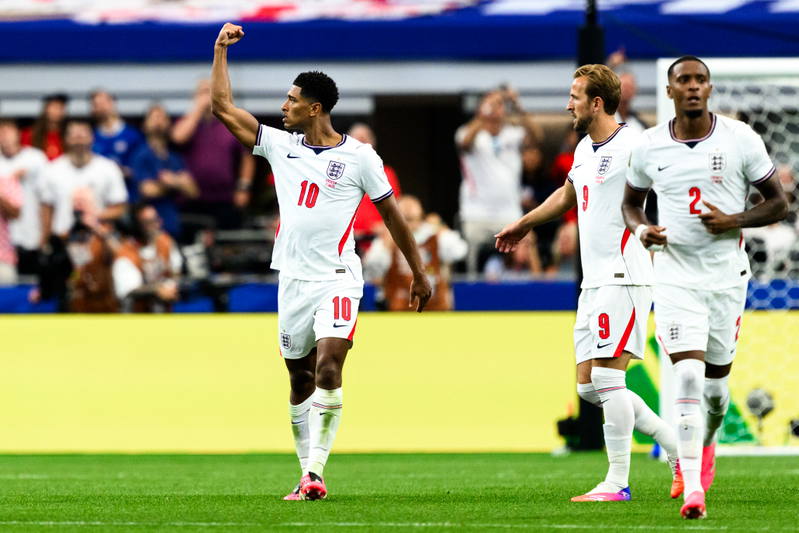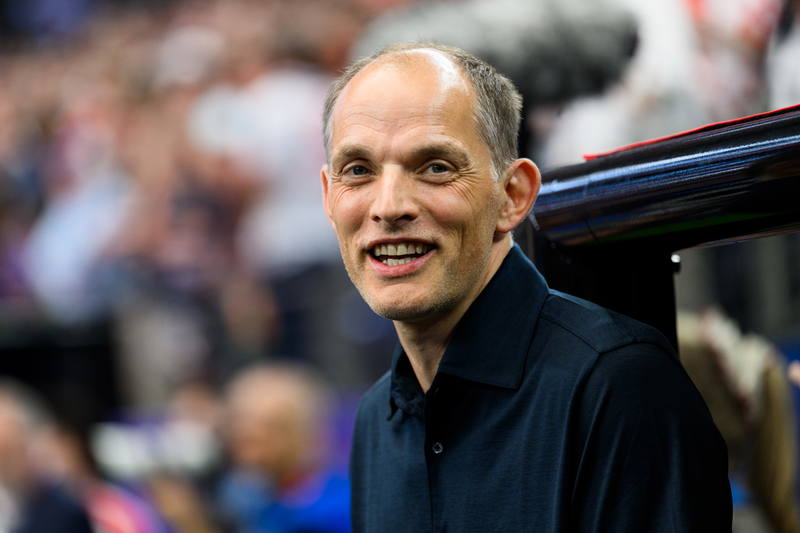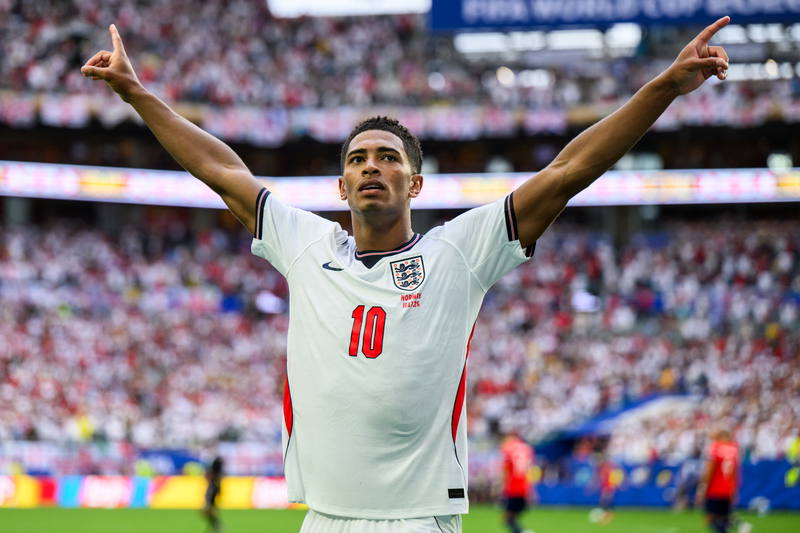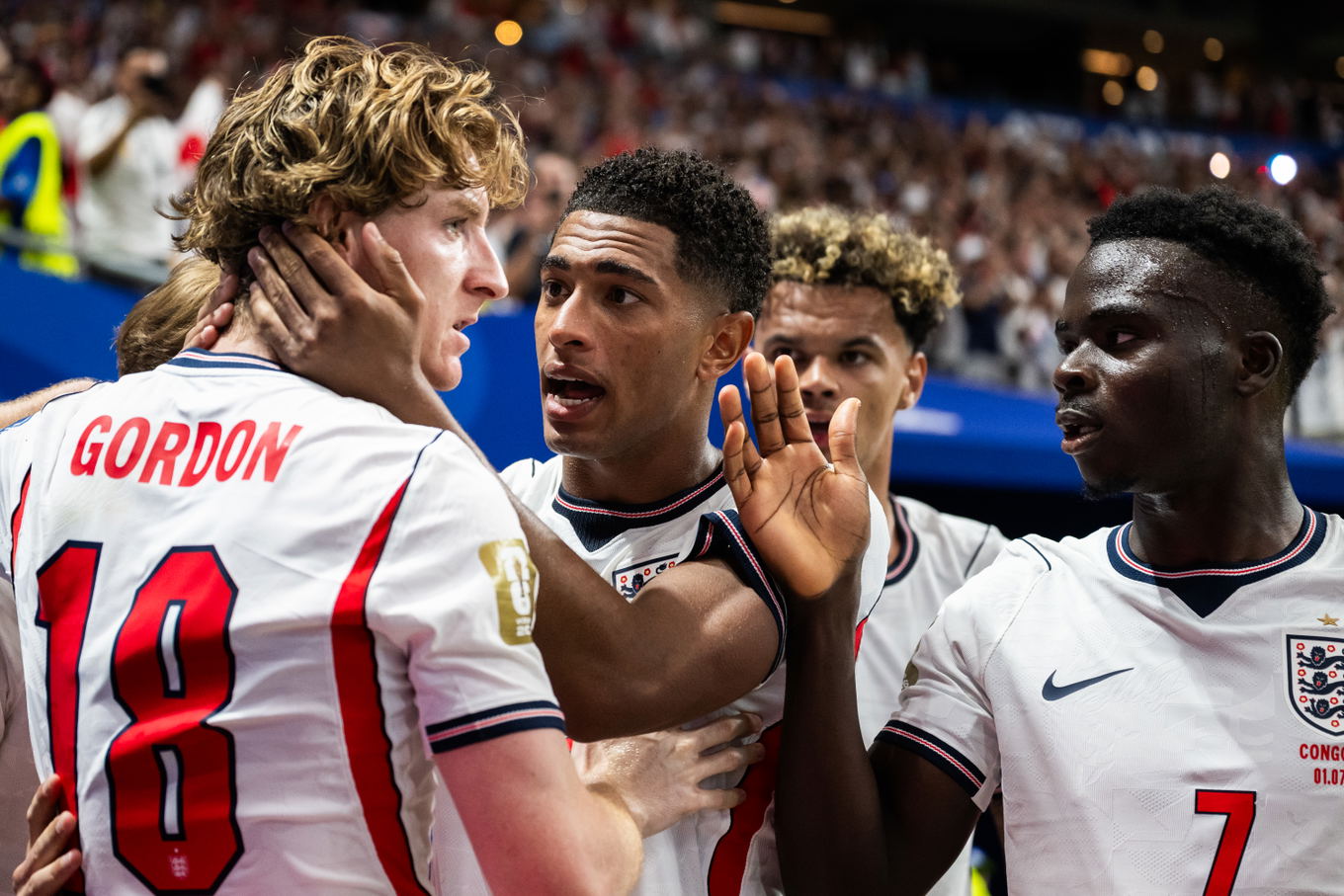
England defeated France 6-4 in the World Cup bronze-medal match, securing the nation's finest tournament finish in 60 years. Bukayo Saka's 9.3-rated hat-trick, Declan Rice's matching 9.3 captaincy across 98 minutes, and Jude Bellingham's 90+8th-minute solo clincher proved decisive despite Kylian Mbappé posting a match-high 9.9 in defeat. Thomas Tuchel had called the third-place playoff a fixture "nobody wants to play"—a premature judgment that a 10-goal, two-half spectacle dismantled.
Ratings reveal what the scoreline hides
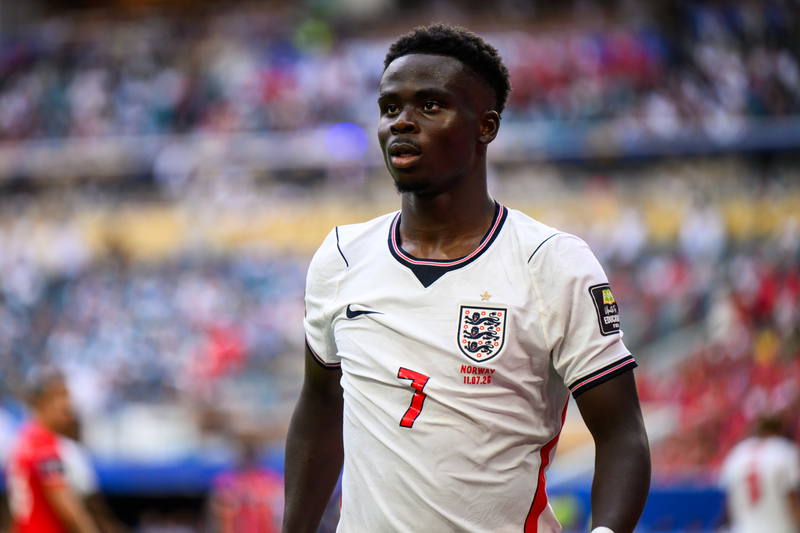
The match was won not by individual excellence but by collective depth. Saka and Rice both finished at 9.3 across 98 minutes—elite performances on the winning side. Saka's came from 3 goals, 4 shots on target, and 3 key passes across all phases. Rice's from 1 goal, 1 assist, 91 passes completed, 7 tackles, and 7 duels won—the full midfielder-captain package.
Mbappé's 9.9 was objectively brilliant. Across 98 minutes, he scored twice (both assisted by Michael Olise), laid 1 assist, took 6 shots (4 on target), and completed 31 passes with 2 key passes. The rating suggested France had England's measure in individual terms. The scoreline—which England won—suggested otherwise.
This was the paradox that defined the match: elite individual performance proved insufficient when paired against multiple 9-plus contributors operating in rhythm. Ezri Konsa at 7.3 added a goal from set-play. Bellingham at 7.3 in just 19 minutes added the clincher. Support depth mattered.
England's first-half dominance: a 4-0 statement
The opening 45 minutes belonged entirely to England. Rice broke the deadlock in the 3rd minute with a direct strike past Mike Maignan—an early shock that gave England the initiative to play freely while France chased. Within 15 minutes, the advantage had doubled. Konsa rose at the back post in the 18th minute to head home from a Rice corner, a set-piece vulnerability that England exploited ruthlessly.
Saka then took control. His first goal arrived in the 37th minute from open play—a composed finish that demonstrated his willingness to run directly at France's backline. Eight minutes later, at 45+1, he struck again, this time picking up possession in midfield after France's press broke down. By halftime, England led 4-6.
That margin was not artificial. It reflected superior positioning, sharper pressing, and the tempo Tuchel had established. Rice controlled the midfield rhythm. Saka pinned France's full-backs. The first 45 minutes constituted one team performing at its level and another unable to access its own. A 4-0 halftime lead typically ends matches. In this case, it merely paused one.
Mbappé's 9.9 and France's second-half revival
France emerged from the break unrecognizable. Ousmane Dembélé entered in the 46th minute, and his introduction shifted the tactical balance immediately. France's press became sharper. Their build-up moved faster.
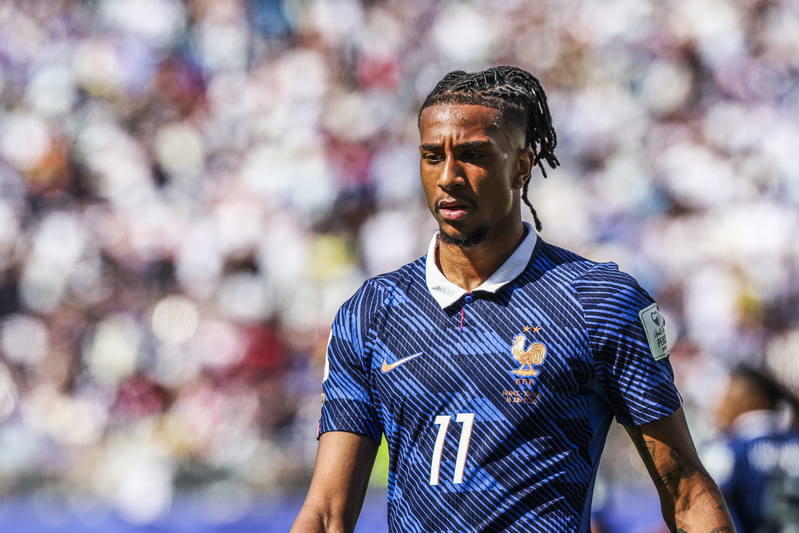
Mbappé scored in the 48th minute, assisted by Michael Olise—the first of two goals in the second period that Olise set up. In the 54th minute, Bradley Barcola added a second goal for France. Mbappé struck again at the 66th minute, again from Olise's assist. The deficit had shrunk from 4-0 to 4-3 in the space of 18 minutes.
For a sustained period, particularly from the 50th to the 70th minute, France looked capable of completing an improbable turnaround. Dembélé, with an 8.5 rating across 53 minutes, provided a physical and creative outlet England struggled to contain. The question became not if France would score again, but when.
Then momentum shifted again, decisively. Saka's 87th-minute penalty restored England's two-goal lead at 6-4. It was not simply another goal; it was a response—a reset after France had drawn level in threat, if not on the scoreboard. Dembélé's 90+6th-minute goal, from Dayot Upamecano's assist, made it 5-4.
Bellingham's late execution seals England's finest World Cup moment
Bellingham had been waiting on the bench. Introduced in the 79th minute, his brief 19-minute cameo carried enormous weight. In the 90+8th minute, he received the ball in midfield, drove forward past tiring French defenders, and finished past Maignan. The 6-4 result was settled.
What mattered most was not the final scoreline—though 6-4 over a World Cup finalist is exceptional—but the context. England had lost their semi-final to Argentina 72 hours prior. In that match, the depth and composure that appeared against France were absent. Three days is minimal recovery. Yet England returned and delivered a performance that felt complete: first-half control, second-half resilience, and late-game execution when the contest could have drifted into uncertainty.
The 6-4 victory stands as England's best World Cup finish since the nation won the tournament in 1966. That 60-year gap between world championships and their next best result underscores what this bronze medal represents: not a consolation prize reframed, but a genuine statement that England can compete across a tournament run and finish at the podium's highest tier available to them.
FAQ
Did Bukayo Saka score a hat-trick against France?
Yes. Saka scored in the 37th minute, 45+1, and 87th minute (penalty), earning a 9.3 rating—joint-second-highest in the match—and driving England's 6-4 World Cup bronze final victory.
Is 6-4 England's best World Cup result ever?
No. England won the World Cup in 1966. The 6-4 bronze medal victory over France is their finest tournament finish since then, marking their best World Cup result in 60 years.
How did Jude Bellingham impact the match?
Introduced in the 79th minute, Bellingham scored the clinching goal in the 90+8th minute. His 7.3 rating in just 19 minutes proved decisive in sealing England's 6-4 victory.
Why did France lose despite Mbappé's 9.9 performance?
Mbappé's 9.9 was elite, but he played on a losing side. England controlled the first half with 4-0 lead via Saka and Rice's matching 9.3 ratings and collective depth. Late goals by Saka (penalty) and Bellingham sealed the outcome.
Written by Jack Mercer with AI-assisted research, cross-checked against 6 outlets. How we work →