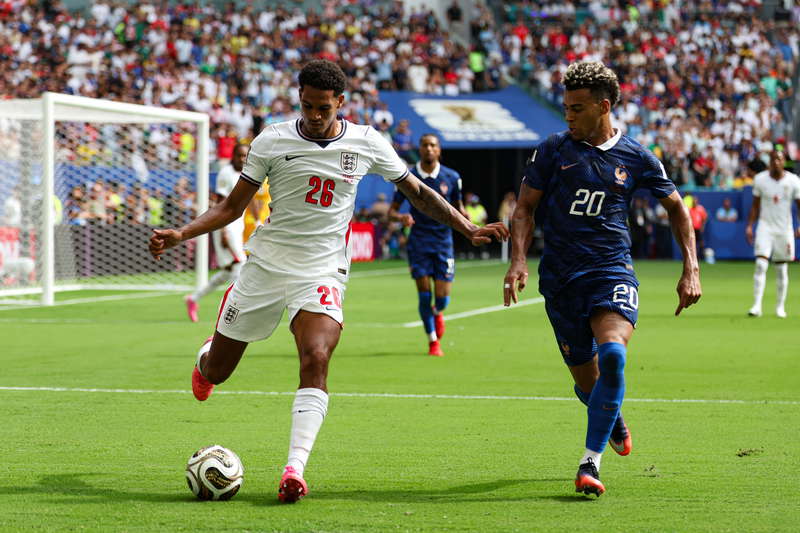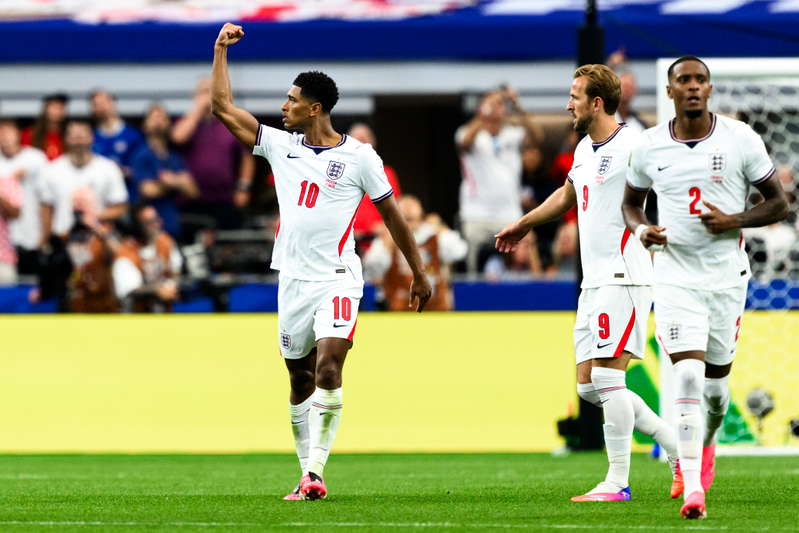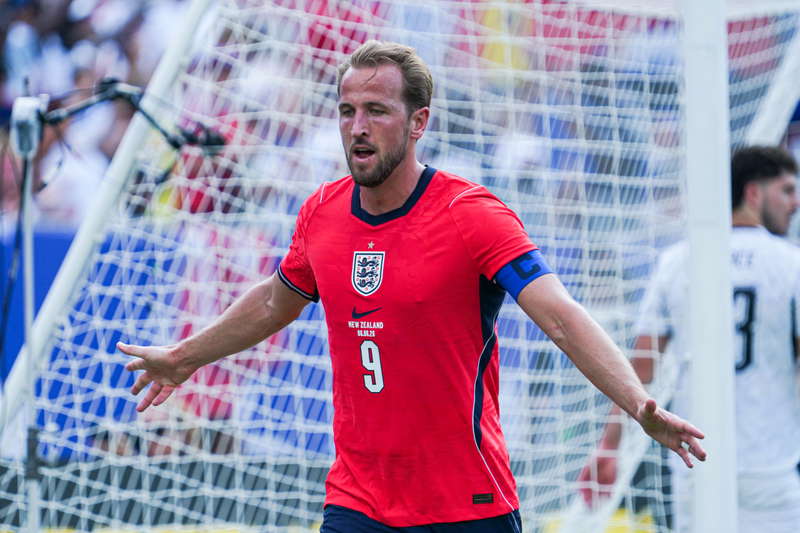



England lined up in a 4-2-3-1 with wide creation patterns Thomas Tuchel had spent months perfecting to impose tactical clarity. Against Argentina, it lasted 45 minutes. Lionel Messi, orchestrating from the centre, moved through the system as though it didn't exist. His 8.6 match rating and 2 assists towered over England's best performer, Elliot Anderson at 7.3 - a 1.3-point gap that was the story of the match.
When Tuchel arrived 16 months earlier, he had been brutally clear about what Gareth Southgate's Euro 2024 team lacked. "The identity, the clarity, the rhythms, the repetition of patterns, the freedom of players, the expression of players, the hunger," he said. But in the 90 minutes against Argentina, each of those qualities - the ones he promised to install - folded the same way Southgate's had.
Tuchel's tactical framework
Tuchel's first major decision was squad construction. Phil Foden, Cole Palmer, and Trent Alexander-Arnold were excluded to prioritize system fit over raw technical talent. The group he selected - with Jude Bellingham at 10, Anthony Gordon on the left, and Reece James on the right - would be orchestrated through set patterns. Wide triangles. Positional rotations. Press triggers designed to win the ball in specific zones.
The system worked in early tournament phases. Against Norway in the quarter-final, England dominated. Tuchel complained after that game anyway. "The result is fantastic but I'm not happy with the performance," he said. The win wasn't enough; what mattered was the execution of patterns. Repetition. Rhythm. The system was so central to his vision that individual sloppiness felt like tactical failure.
The architecture itself was deliberate. Declan Rice and Elliot Anderson anchored midfield. Wide rotations gave England multiple passing angles in the final third. Bellingham roamed between the lines with freedom to drop and receive. The principle was to build from the back through the wings rather than centrally - a deliberate move away from what Southgate had done.
Argentina's elite response
None of this mattered against a 4-1-4-1 with Messi at its centre. Leandro Paredes (7.2 rating, 70 passes, 4 tackles) and Argentina's midfield did not allow England to build their patterns. More critically, Messi operated in the central areas where Tuchel's wide triangle principle was thinnest. With the ball at his feet 20-odd yards from goal, Messi generated chances and dictated play from the area Tuchel had deliberately downgraded in favour of wing-based creation.
Bellingham managed a 6.6 rating in the semi-final, below his World Cup average of 6 goals in 7 appearances. Argentina's defensive focus, combined with Messi's central dominance, pinned him down. By the 55th minute, England had one meaningful attacking sequence: Morgan Rogers providing an assist for Anthony Gordon's goal. One assist from the system in 55 minutes of possession.
Lautaro Martínez arrived off the bench in the 74th minute. For 18 minutes of work, he scored the 92nd-minute sealer with a 7.0 rating - a clinical finish that England's back line, averaging 6.6 across the four, could not prevent. It was not tactical failure. It was depth. Argentina had won five straight matches into the semi. Messi's 8.6 rating and 2 assists, Paredes' control, Martínez's clinical finishing - each symbol of a gap in individual quality that no blueprint could close.
The limits of any system
Tuchel was right that Southgate's Euro 2024 team lacked identity. But he learned too late that clarity of system and elite opposition are not the same problem. Both managers started from opposite ends of the philosophical spectrum - one top-down and rigid, one flexible and pragmatic - and collided at the same wall: not a wall of tactical design, but of individual brilliance they simply did not possess in sufficient quantity.
The formations were different. The philosophies were opposite. The outcome - a semi-final exit to a side with genuinely world-class individuals - was identical. Against Messi's 8.6 and Argentina's midfield control, no amount of system repetition could matter. Tuchel's promise was to give England an identity. He did. It was just not enough.
FAQ
Did Thomas Tuchel's tactical system fail at the World Cup?
Tuchel's 4-2-3-1 and wide triangle principle worked in early tournament phases. Against Argentina, the system wasn't flawed - it was insufficient. Lionel Messi (8.6 rating) and Argentina's elite midfield, led by Leandro Paredes (7.2 rating), proved that even the clearest tactical blueprint cannot compensate for a gap in individual world-class talent. Tuchel discovered the same hard limit that Gareth Southgate had found.
How did Argentina break England's tactical system?
Argentina deployed a 4-1-4-1 with Messi orchestrating centrally - the exact area where Tuchel's wide triangle principle was weakest. Paredes controlled the midfield with 70 passes and 4 tackles. Messi finished with 8.6 rating and 2 assists. While England created one assist in 55 minutes via Morgan Rogers, Argentina's central playmaking generated constant pressure. The system didn't fail; Argentina's elite depth simply overwhelmed it.
Why did Tuchel exclude Foden and Palmer if it didn't help?
Tuchel prioritized system fit over raw technical talent, selecting a squad built specifically for his patterns. When Argentina's elite players neutralized those patterns, England had no plan B. Both Tuchel and Southgate, despite opposite philosophies, reached the semi-final and both lost to superior individual talent. The exclusions revealed a structural choice: a rigid system could work against most opponents but not elite ones.
Written by Jack Mercer with AI-assisted research, cross-checked against 1 outlet. How we work →