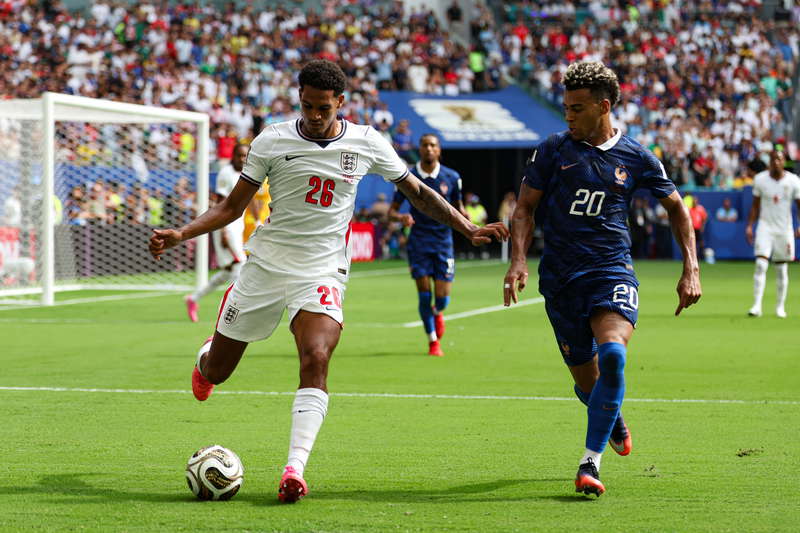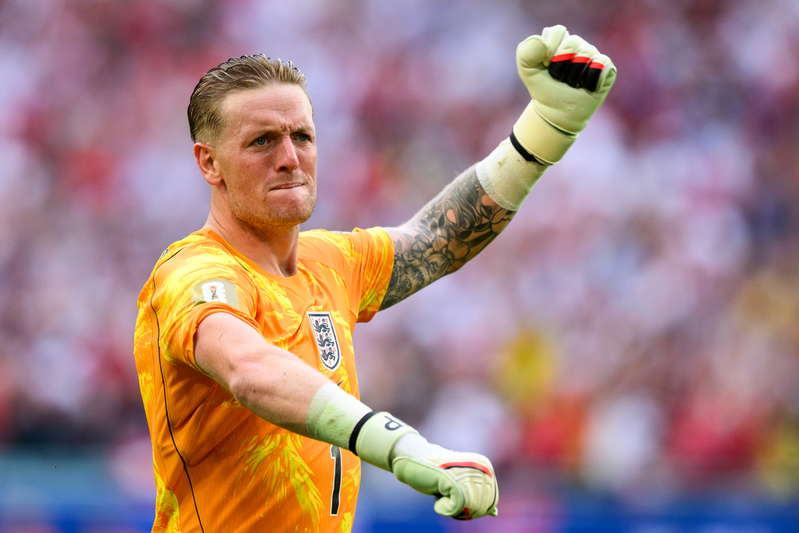



The new World Cup set-piece rules issue is not some minor officiating tweak. FIFA has approved a clarification to the VAR protocol for the 2026 World Cup that allows intervention on clear attacking fouls before a corner kick or free kick if they directly affect a goal, penalty kick or disciplinary sanction. For England, that matters immediately because set pieces are supposed to be one of the clearest weapons under Thomas Tuchel.
What FIFA has actually changed
Pierluigi Collina was blunt when explaining why FIFA wanted the change. Speaking to mirror.co.uk, he said: "We want the VAR to intervene even if a foul is committed just before the ball is in play. We are convinced nobody can object to that."
That is the key point. The focus is on attacker fouls before the restart, especially the sort of blocks and grappling that can free up space in the box before a corner arrives.
Collina also made clear what kind of action FIFA now wants punished. He said: "There is a clear foul committed against the defender. The attacker clearly goes and illegally blocks the opponent; his only objective is to prevent the defender from being able to defend against his opponent. We are convinced that this goal cannot stand, it is completely unfair."
This is why the change feels bigger than a technical rewrite. Tight tournament games are often decided by one dead-ball moment, and FIFA is trying to remove the idea that a goal can survive just because the contact happened before the ball was in play.
The crackdown is wider than corners too. A red card will be shown to any player covering their mouth while talking to an opponent in what is deemed an aggressive manner, while players or coaches leaving the field in protest at a referee's decision will also be sent off.
Why England and Arsenal are in the middle of the argument
The most relevant part for England is that Collina did not speak in abstractions. He cited Ben White's England goal against Uruguay at Wembley in March as the example for the new interpretation, saying Adam Wharton's block on José María Giménez would not stand.
That pulls the debate straight into England's own planning. If Tuchel wants a team that can lean on clever movement, screens and rehearsed routines, the line between smart coaching and an attacker foul is now going to be watched far more closely.
It also explains why Arsenal keep coming up in this conversation. Mikel Arteta's side scored 24 goals from set-pieces last season, which makes them the obvious modern reference point whenever officials talk about how dangerous these routines have become. White has made 30 appearances this season and played 381 minutes across his last five club matches, so he is not some outdated example being dragged back into the debate.
Wharton is just as current a reference. He has made 53 appearances this season, which helps explain why his role in that Wembley example has become part of a wider discussion about how England create separation in the box.
Some coverage has tried to frame this as an anti-Arsenal law. That goes too far. Arsenal's set-piece output makes them relevant, and their methods are clearly part of the backdrop, but neither FIFA nor IFAB has used that label in the sourced comments here.
What this means before the World Cup
The practical effect is simple enough. Teams can still work on blocking schemes and crowding the box, but the margin for error is getting smaller and VAR now has a route into incidents that used to sit outside the protocol.
For England, that means a weapon may still exist, just in a cleaner form. For Arsenal, it means the attacking model that produced 24 set-piece goals is exactly the sort of model referees will study more closely.
Collina's argument is hard to dismiss because it is built around fairness rather than aesthetics. He asked whether supporters would accept losing "because the VAR is written that cannot intervene." FIFA's answer is no, and the 2026 World Cup will be refereed accordingly.
So the real question for Ben White, Adam Wharton and England's set-piece coaches is not whether dead-ball routines still matter. It is whether the routines they trust most will still survive a VAR check when the tournament starts.
FAQ
Will the new World Cup set-piece rules hurt England at corners?
They could. FIFA has approved a VAR clarification for the 2026 World Cup that allows intervention on clear attacking fouls before a corner or free kick if they directly affect a goal, penalty kick or disciplinary sanction. That matters for England because set pieces are expected to be a major weapon under Thomas Tuchel.
Why are Ben White and Adam Wharton being mentioned in the World Cup rules debate?
Pierluigi Collina used Ben White's England goal against Uruguay at Wembley in March as his example for the new interpretation. He said Adam Wharton's block on Jose Maria Gimenez would not stand under the updated approach, which put both players at the centre of the discussion.
Are FIFA's new set-piece rules really aimed at Arsenal?
That label has been used in media coverage, but not by FIFA, IFAB or Collina in the material here. Arsenal are relevant because they scored 24 set-piece goals last season, so their attacking model is an obvious reference point. Still, calling it an anti-Arsenal law goes further than the sourced comments support.
What other disciplinary changes are coming at the 2026 World Cup?
There is more than the pre-corner VAR change. A red card will be shown to any player covering their mouth while talking to an opponent in what is deemed an aggressive manner. Players or coaches who leave the field in protest at a referee's decision will also be sent off.
Written by Jack Mercer with AI-assisted research, cross-checked against 3 outlets. How we work →