

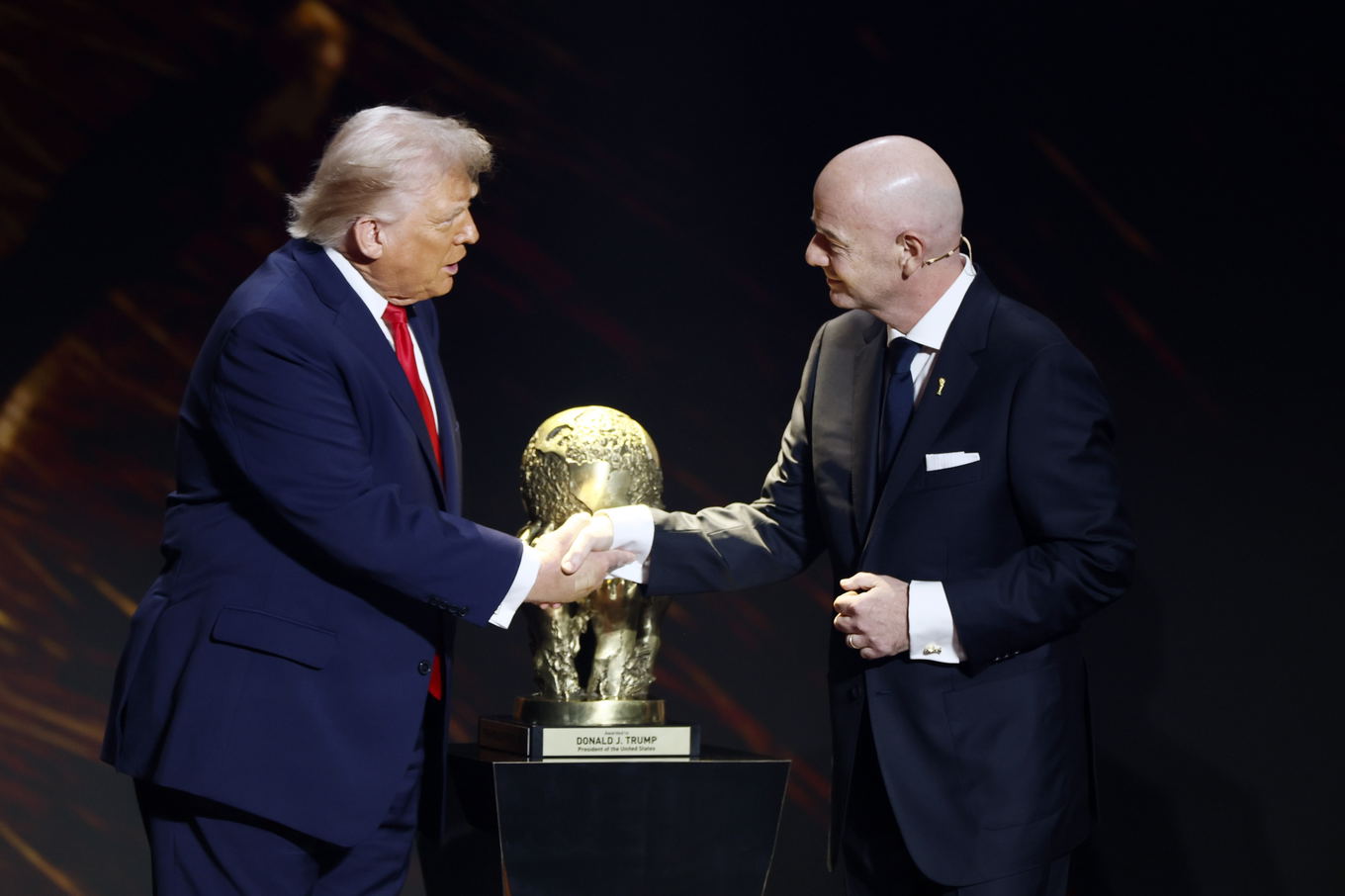
The biggest World Cup ever begins on Thursday, and much of the build-up has centred on events away from the pitch. A tournament of 48 teams across 16 venues has been accompanied by a series of off-pitch issues: entry refusals into the United States, a news conference in which FIFA president Gianni Infantino told critics to "chill, relax", questions over his relationship with Donald Trump, and a criminal complaint filed against him by former UEFA president Michel Platini days before kick-off.
An expanded World Cup in a charged setting
The 2026 World Cup is the first staged with 48 teams, spread across 16 venues in the United States, Canada and Mexico, and it arrives with record revenues to match the scale of "United 2026". The expanded format was promoted as widening access to the tournament, with more nations involved than ever before. In the build-up, a different question, who can enter the host country, has taken up much of the attention.
That is partly a function of where the tournament is being held. The majority of matches are in the United States, and entry and visa decisions there rest with the US government rather than with FIFA, which has limited formal say over who is admitted. The combination of an unprecedented field and a host country with strict entry policies has produced a run of high-profile cases that football's governing body has had to field without controlling them. Much of the coverage on the ground has framed the tournament around the politics of its main host rather than the football.
Entry denials and visa problems
The most prominent case involves a referee. Somali official Omar Artan, described in reporting as one of Africa's leading referees and one of the 52 match officials selected for the tournament, was denied entry to the United States and will miss the World Cup, reportedly turned away at Miami despite holding valid travel documents.
He was not the only one affected. Iraq striker Aymen Hussein was questioned for several hours at a Chicago airport before being allowed into the country. Iran's preparations were disrupted by reported visa refusals for delegation members, cancelled fan tickets and a switch of base to Mexico, with Iranian officials describing the treatment as discriminatory. Iran's squad was later granted visas to enter the United States ahead of its opening match against New Zealand in Los Angeles, after the earlier delays.
Coverage has grouped these cases together as a test of who could and could not enter the country for the tournament. They put FIFA under pressure to respond, even though the decisions themselves were taken by US authorities rather than the governing body.
Infantino addresses the issues
Infantino faced the media for the first time in three years, at the Azteca on the eve of the opening match between Mexico and South Africa. He played down the controversies. "Just, you know, chill, relax," he said. He described Artan's case as "unfortunate" and gave a firm defence of the United States and of Trump as hosts.
The response drew criticism. Reporting on the news conference argued that Infantino had passed up a chance to back his own official and to question how entry decisions had been handled. His relationship with the US president has also been the subject of growing scrutiny, with long-form coverage examining how close the two have become and what it might mean for FIFA. Supporters of the governing body make a structural point in return: visa and border policy is set by national governments rather than by FIFA, and Iran's squad was eventually admitted once the visas were issued.
Platini's complaint against Infantino
Days before kick-off, Platini added a legal dimension. The former UEFA president has filed a criminal complaint in Paris against Infantino and two former FIFA officials, legal director Marco Villiger and audit chair Domenico Scala, alleging malicious prosecution and influence peddling. The accusations are allegations rather than findings, and the named officials have not been found liable.
They relate to the scandal that ended Platini's career in football administration. Platini was the favourite to succeed Sepp Blatter as FIFA president in 2015 before both men were suspended by FIFA's ethics committee over a 2 million Swiss franc "disloyal payment". Platini and Blatter were later exonerated by the Swiss courts, and Platini is separately suing FIFA for damages in Switzerland over what his lawyers describe as a deliberate attempt to block his succession. Infantino served as UEFA general secretary under Platini before being elected to the FIFA presidency.
The complaint surfaced on the eve of the tournament Infantino now oversees.
What happens next
The tournament itself starts on Thursday with Mexico against South Africa at the Azteca, and a 48-team competition will draw attention back to the football. The build-up has shown how closely this World Cup is tied to the politics of its host countries, where the governing body controls the tournament but not the borders around it. The opening match will move the story forward. The off-pitch questions are unlikely to disappear quickly.
FAQ
Why has the 2026 World Cup build-up been so political?
The first 48-team World Cup is hosted mainly in the United States, and the build-up has been dominated by entry and visa problems there. Officials and fans were denied entry, FIFA president Gianni Infantino faced criticism for his response, and a criminal complaint from Michel Platini was filed on the eve of kick-off. Entry decisions are taken by US authorities rather than FIFA.
Who was denied entry to the US for the World Cup?
Somali referee Omar Artan, one of 52 selected officials, was denied entry despite valid documents and will miss the tournament. Iraq striker Aymen Hussein was questioned for hours at a Chicago airport, and Iran had delegation visas refused and fans' tickets cancelled before the squad was later granted visas ahead of its opener against New Zealand.
What did Infantino say about the World Cup controversies?
Facing the media for the first time in three years at the Azteca, Infantino played down the issues, saying 'chill, relax'. He described the referee's entry denial as 'unfortunate' and defended the United States and Donald Trump as hosts. FIFA's position is that visa and border decisions are set by national governments, not the organising body.
What is Michel Platini's complaint against Gianni Infantino?
Platini has filed a criminal complaint in Paris against Infantino and two former FIFA officials, Marco Villiger and Domenico Scala, alleging malicious prosecution and influence peddling over the 2015 scandal that ended his career. These are allegations, not findings; Platini and Blatter were later exonerated by the Swiss courts, and Platini is separately suing FIFA for damages.
Written by Sam Whitfield with AI-assisted research, cross-checked against 4 outlets. How we work →