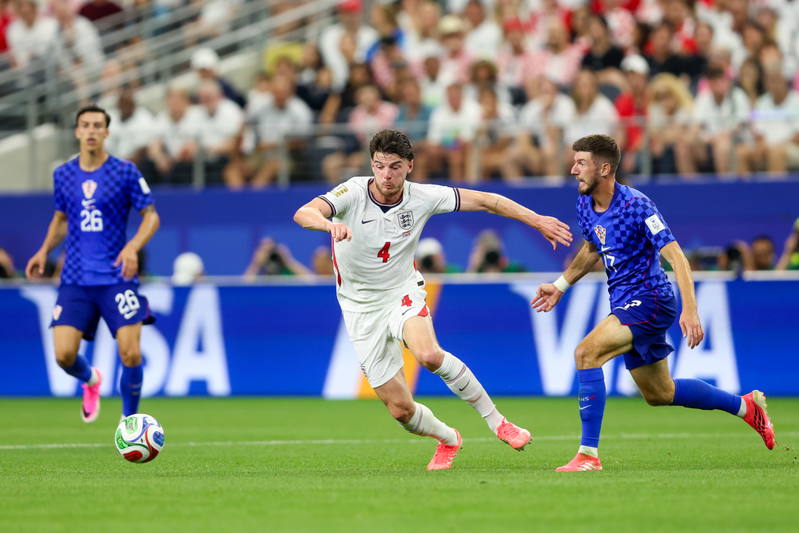
England faced an unusual but significant pre-match crisis ahead of their World Cup 2026 campaign opener against Croatia. Eighteen players were forced to wear different shirts from their squad-mates — a rare logistical failure that emerged during final preparations and placed squad unity under pressure at the tournament's critical opening moment.
The scale alone was striking. Eighteen players represent approximately 78% of a typical 23-player World Cup squad, making this far more than a minor administrative oversight. The players' shirts were visibly different from those of their team-mates, creating a disparity in squad presentation that could not be overlooked or explained away in the dressing room.
Tournament preparation officials told Mirror: "England's World Cup 2026 campaign will get underway as they face Croatia but some players' shirts are different to that of their team-mates." The issue exposed organizational vulnerabilities at precisely the moment when squad readiness matters most.
Timing intensified the damage. The incident occurred in the final preparation period before competition began, leaving minimal space for morale recovery or corrective action. For a squad preparing to compete at football's highest level under Thomas Tuchel, such a basic logistical failure sent an unwelcome message about preparation standards and attention to detail.
Why squad unity matters at a World Cup
At the tournament's outset, symbols carry weight. Matching kits represent shared purpose, professionalism and collective identity. When nearly four-fifths of the squad wore different shirts, the problem transcended logistics and entered the realm of psychology and confidence.
Defensive linchpins like Dean Henderson, Dan Burn, Marc Guéhi and Reece James faced this disparity alongside defenders Ezri Konsa, Trevoh Chalobah and Djed Spence. Younger squad members including James Trafford, Nico O'Reilly and Jarell Quansah also experienced their World Cup preparations shadowed by an easily preventable failure.
The England camp had prepared meticulously for this campaign opener. Kit coordination is elementary match management. Yet a single point of organizational breakdown undermined that preparation in the dressing room moments before kick-off against a strong opponent. The disparity in kit was not a performance factor, but it was a management failure at a moment when presentation and readiness should be seamless.
Whether the squad can quickly move past the distraction and focus on the tactical challenge remains the immediate question. For now, England's World Cup 2026 campaign begins with an unusual chapter — not the start Tuchel and his backroom team had intended.
Written by Sam Whitfield with AI-assisted research, cross-checked against 1 outlet. How we work →