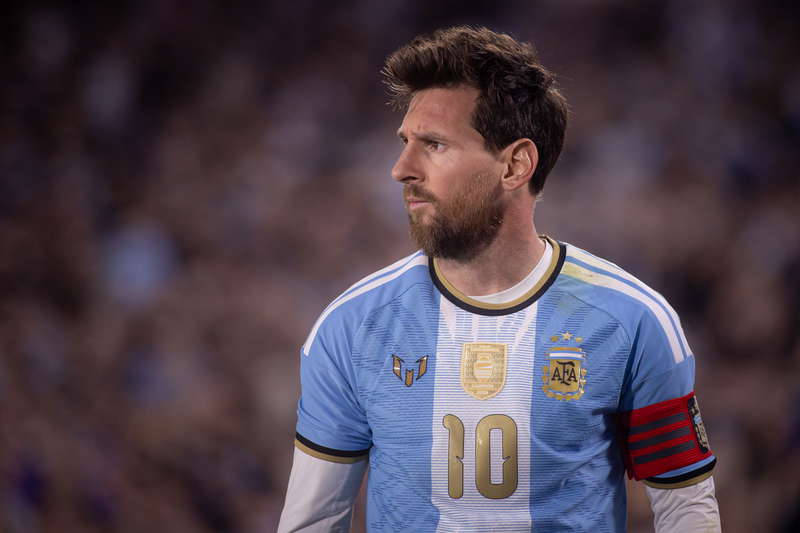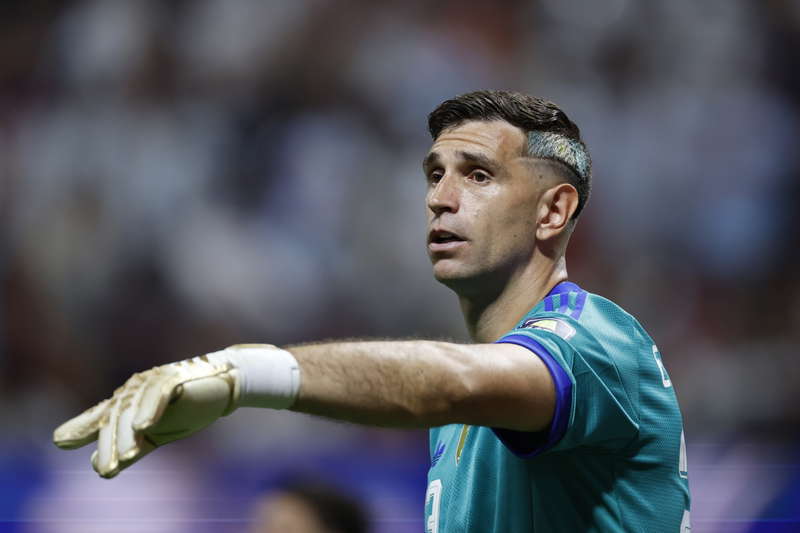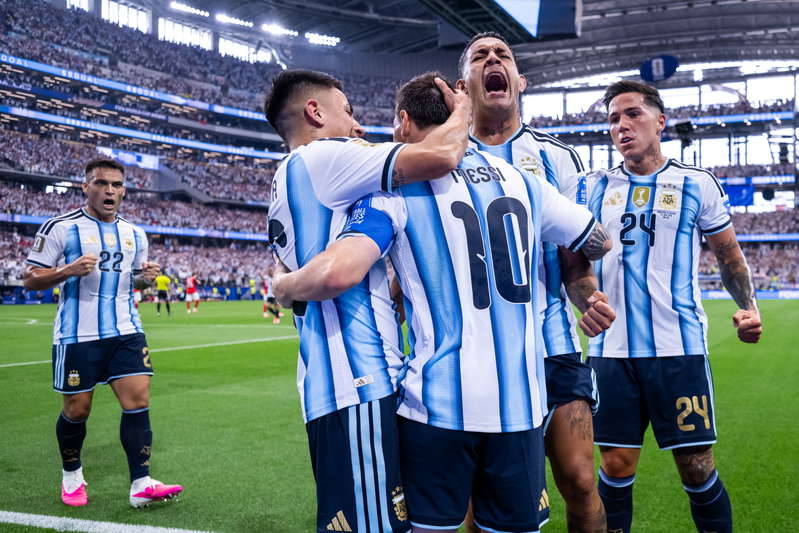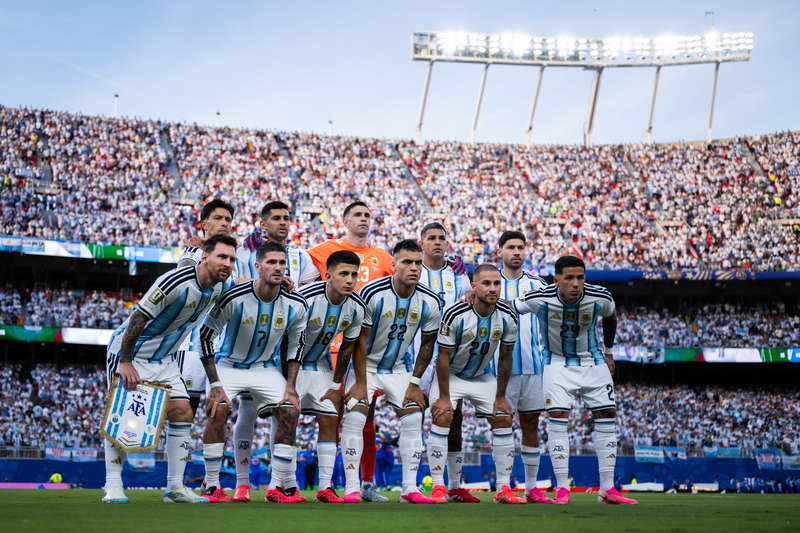


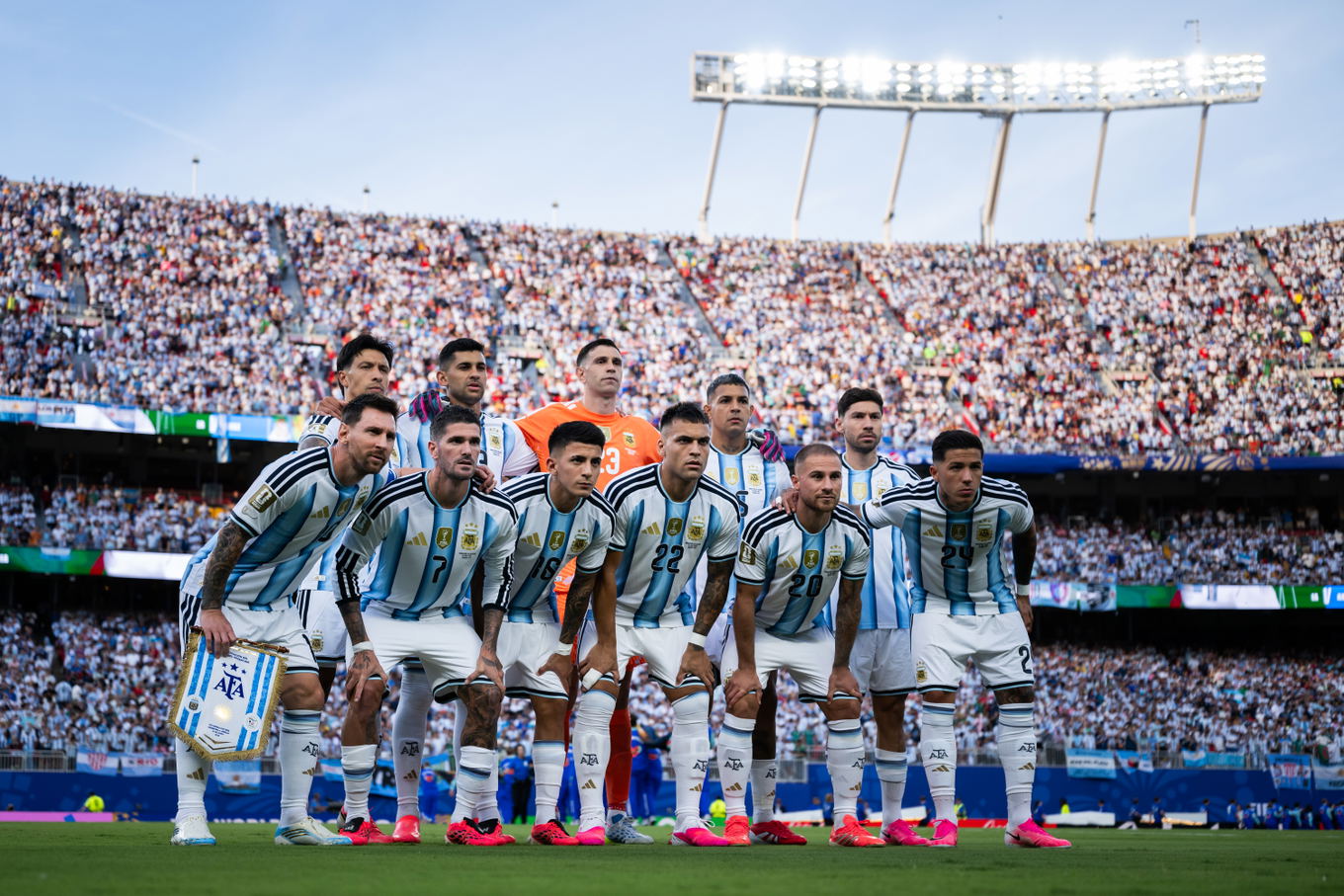
Earlier this week, we reported on Argentina's dramatic 2-1 World Cup semi-final victory over England and the post-match banner display that overshadowed the win: players held a sign reading "Las Malvinas son Argentinas" - the Falklands are Argentine - moments after the final whistle. Fifa has now formally opened a disciplinary investigation into the gesture, confirming it is examining whether the display breached the governing body's rules on political action.
The investigation marks the second time in 12 years that Argentina faces potential sanction for the same message. Fifa fined the country £20,000 in 2014 when players held an identical banner before a friendly against Slovenia. That precedent suggests a financial penalty is likely, though Fifa has offered no indication of timeline or severity. Fifa confirmed its "independent disciplinary committee is currently assessing the match reports and considering the relevant circumstances before deciding on potential further steps based on the Fifa disciplinary code."
The mechanics and precedent
Fifa's statutes prohibit political action and team misconduct under Article 13, giving the disciplinary committee significant discretion in interpreting what constitutes a breach. The gesture itself is unambiguous: the banner's text was explicit. The two players held it after the match ended, on the sideline rather than during play, a distinction that may affect how Fifa weighs the severity. The committee may view post-match conduct differently from in-game displays.
The 2014 precedent offers limited guidance. That case resulted in a fine, but Fifa has historically imposed varying penalties depending on context, visibility, and the player's intent. A gesture involving two players on the sideline differs from, say, a coordinated team-wide demonstration or a message displayed on the pitch during play. How Fifa interprets the distinction remains unclear.
Argentina faces the unusual position of preparing for Sunday's final while an open disciplinary investigation looms. Fifa typically issues rulings days or weeks after an incident, meaning the committee could announce its decision before, during, or long after the match against France. That uncertainty shadows Argentina's bid for a second consecutive World Cup title.
The territorial roots
The Falkland Islands are a British overseas territory located 300 miles off Argentina's east coast, though Argentina has never recognized that claim. The dispute escalated into an armed conflict in 1982 that lasted 74 days and resulted in 649 Argentine deaths, 255 British servicemen deaths, and 3 islander deaths. For millions of Argentines, the territorial claim remains an open wound and a point of national pride. Invoking it at the World Cup is, for them, a legitimate expression of a historical grievance.
Yet the display divided opinion sharply. The UK government responded with immediate firmness: "The World Cup might not be ours, but the Falkland Islands definitely are. Our commitment to the Falklands will never waver," a Prime Minister's official said, restating Britain's position without ambiguity.
Argentina's own President struck a more complex tone. Javier Milei called the players' gesture "understandable" and "valid", offering qualified support. But he immediately added a boundary: "the things that happen on the pitch are not part of diplomacy." The comment seemed designed to validate the players' emotions while distancing the government from any escalation - a careful line that satisfied neither supporters nor critics entirely.
The broader stakes
Fifa's investigation will be decided on rules, not on the merits of the Falklands claim. Yet the outcome carries symbolic weight. If Fifa imposes sanctions, it sends a message about how strictly it enforces restrictions on political expression at the World Cup. If it declines to act, it signals a shift in enforcement that could invite similar displays from other teams in future tournaments.
For Argentina, the investigation adds uncertainty to a tournament run defined by excellence on the pitch. The team earned its place in the final through dramatic comeback and tactical brilliance. Now that achievement is entangled with a geopolitical dispute that sits far outside the sport. Fifa's ruling, whenever it comes, will settle the disciplinary matter. It will not settle the Falklands, and it will not erase the banner from memory.
FAQ
Will Fifa punish Argentina for the Falklands banner?
Fifa's disciplinary committee is assessing the gesture under Article 13 of its statutes, which prohibits political action. In 2014, Argentina was fined £20,000 for holding an identical banner. A ruling has not been announced, and the timeline is unclear.
Why did Argentina hold the Falklands banner at the World Cup?
The banner reading 'Las Malvinas son Argentinas' represents Argentina's disputed claim to the Falkland Islands, a British overseas territory 300 miles off Argentina's coast. The territory dispute traces to a 1982 conflict between the two nations.
What are Fifa's rules on political gestures?
Fifa's Article 13 prohibits discriminatory conduct, political action, and team misconduct. The disciplinary committee has discretion in determining what constitutes a political gesture. Post-match displays may be treated differently than gestures made during play.
Can Argentina play in the World Cup final while under Fifa investigation?
Yes. Fifa's disciplinary investigation is separate from match eligibility. Argentina is eligible to compete in Sunday's final while the investigation proceeds. A ruling could be announced before, during, or after the tournament.
Written by Jack Mercer with AI-assisted research, cross-checked against 1 outlet. How we work →