

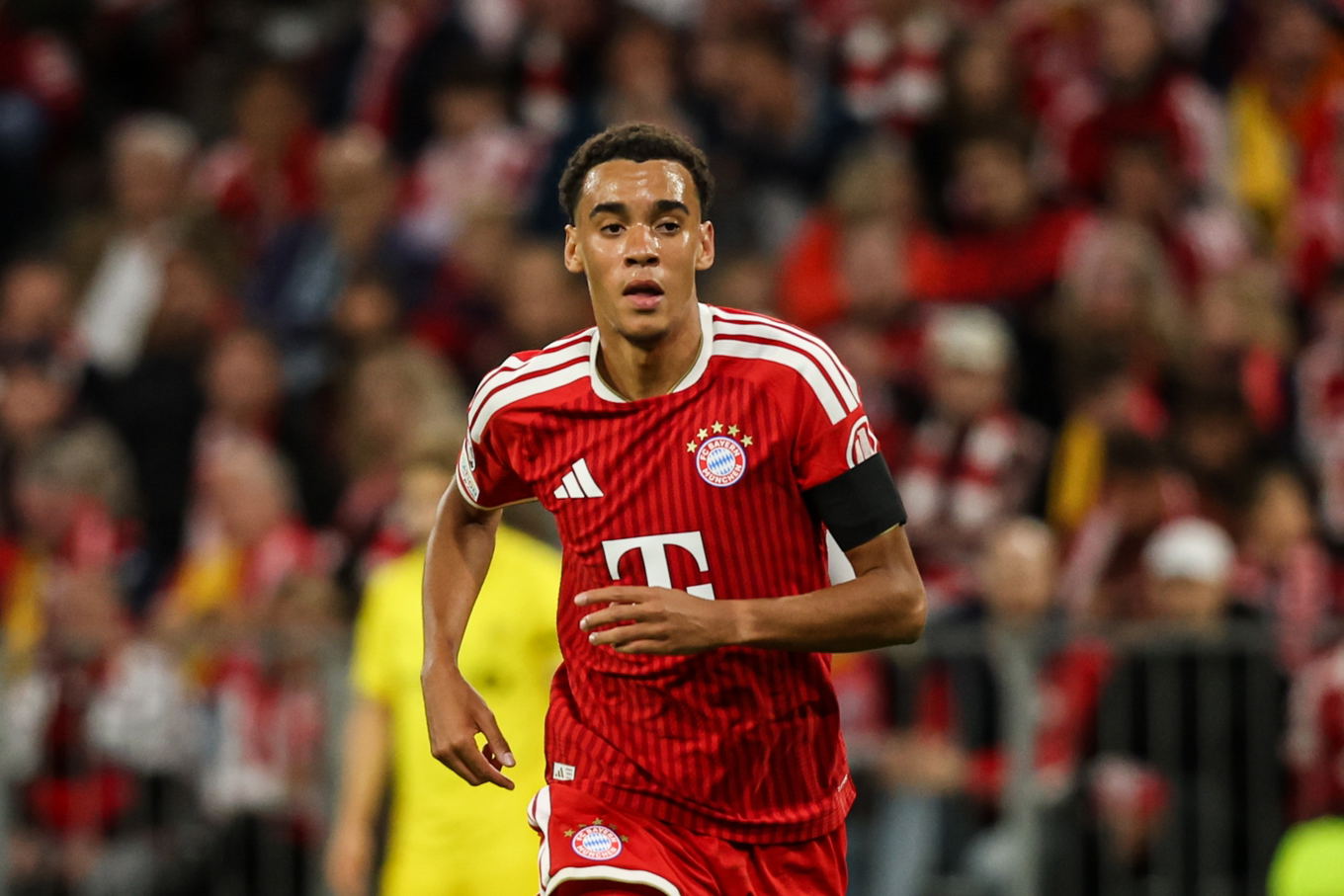
Jamal Musiala collapsed during Bayern München's 3-1 win over RB Leipzig after scoring in the 81st minute. Max Eberl's immediate message was clear enough: "The most important thing, he's doing well!" Musiala was caught by a teammate before he hit the turf, medical staff later gave a thumbs-up from the dugout, and he was eventually able to walk off under his own power, flanked by staff.
Bayern's public line after the Leipzig scare
That first incident was alarming in itself, and Bayern's early response was to calm the temperature rather than speculate. Preliminary medical examinations did not reveal any problems after the scare, and Eberl repeated that Musiala was doing well after the Leipzig incident.
The football context is still there, but it sits well behind the health issue. Musiala has only 4 appearances at the 2026 World Cup and a 6.8 rating there, so this is not a case of a player carrying heavy competitive mileage through the summer. His condition is the story, not his form.
The Heidenheim collapse raises the alarm again
Then came the second episode. Musiala collapsed again during the 1. FC Heidenheim friendly after coming on in the 61st minute and going down in the 66th minute. The Bayern XI crowded around him and he eventually walked off appearing dazed.
That is why the follow-up matters more than the first scare. One collapse can be written off as a freak event. Two in a week force a far harder conversation around what Bayern are looking at and how carefully they need to handle him. Eberl also said, "Jamal will speak about it," which suggests the club are leaving the details for Musiala rather than trying to close the subject themselves.
Bayern's line after both incidents is still the same, and it is the only one they can really give right now. Musiala is being checked, he walked off under his own power after Leipzig, and he also left the Heidenheim game after another collapse. The next public update will have to explain more than reassurance, because the same player has now gone down twice in a week.
- bavarianfootballworks.com
- bbc.co.uk
- bundesliga.com
- dailystar.co.uk
- goal.com
- metro.co.uk
- standard.co.uk
Written by Jack Mercer with AI-assisted research, cross-checked against 7 outlets. How we work →