

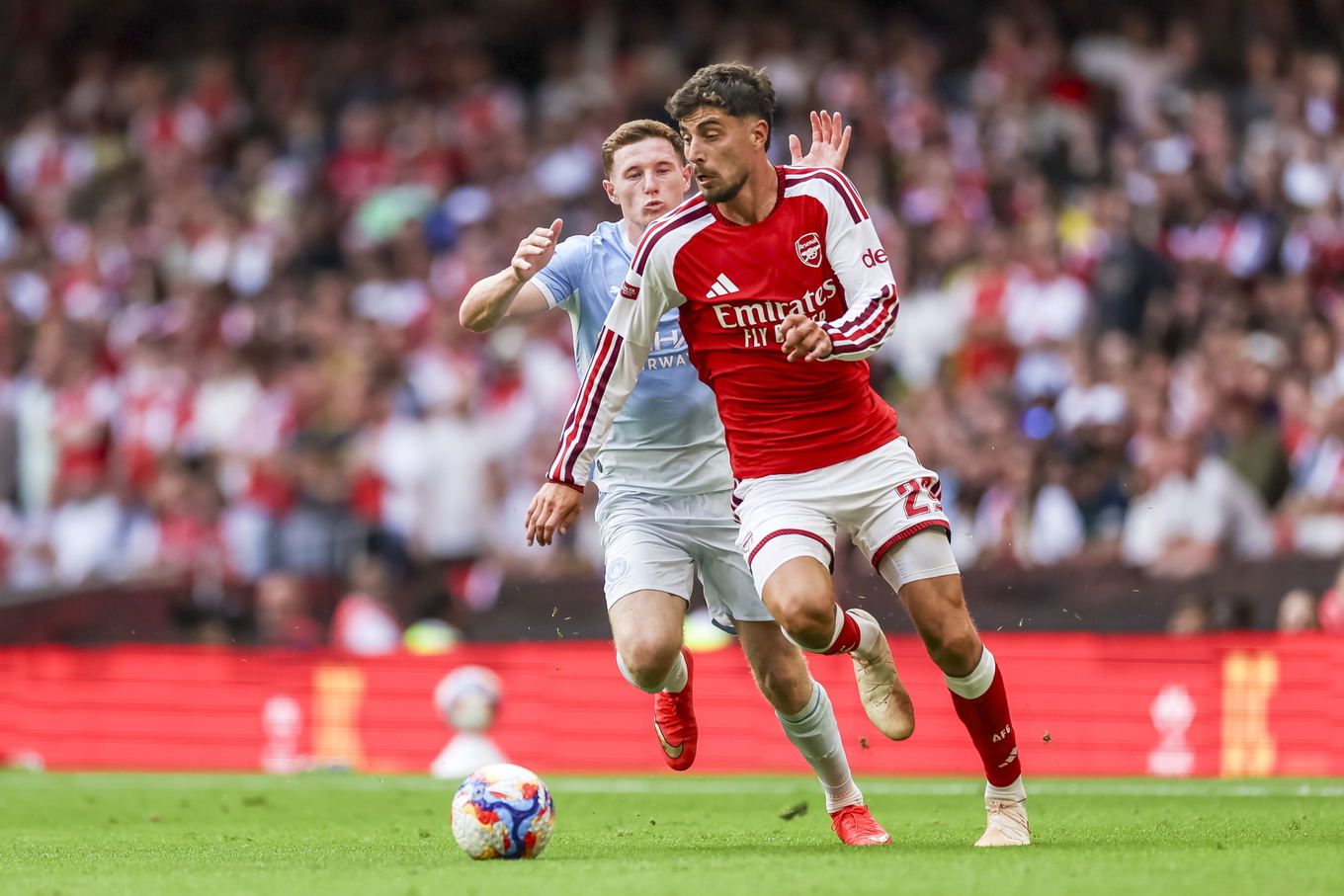
Kai Havertz gave Arsenal instant proof that Mikel Arteta's boldest selection call was not reckless. Picked ahead of Viktor Gyokeres, he scored after seven minutes in the Champions League final and handed Arsenal the perfect start. The pain for Arsenal is that the decision worked, at least in that moment, and they still ended the night beaten by Paris Saint Germain on penalties.
Why Arteta went with Havertz
Arteta made the biggest call of the night before a ball was kicked. He started Havertz ahead of Gyokeres, despite Gyokeres arriving at the final as a serious alternative and the higher-profile summer attacking addition.
Arteta's reasoning was clear enough. Speaking to football.london, he said: "It was very difficult as they both bring different stuff, but with the game that we're expecting, we believe this is the right call and we then have time to bring on Viktor at any moment."
That explanation looked sensible almost immediately. Havertz struck after seven minutes, and the early goal turned a debated selection into one Arsenal could feel good about for long stretches of the night.
This is where the discussion around the choice needs a bit of discipline. Havertz scoring early does not mean Arteta was right in every broader argument about his forwards. It does mean the specific final plan was vindicated. Arsenal got exactly the start they wanted from the player chosen to lead the line.
There was a case for Gyokeres as well. His 6.75 Champions League rating this season shows he was not some token option sitting on the bench. But Havertz's own European numbers gave Arteta a strong football case for sticking with him. He finished the campaign with a 7.33 Champions League rating, better than his 6.63 Premier League mark, which suggests Europe was where his best level showed up.
Thierry Henry summed up the appeal of Havertz well when he told goal.com: "He has this gift for scoring important goals. He constantly applies pressure and reads the game exceptionally well thanks to his high footballing IQ. He uses his brain, so he can slot in across several positions. Hopefully Havertz can now stay injury-free for a change."
That versatility matters in finals. Managers tend to trust players who can solve a few problems at once, and Arteta clearly felt Havertz gave him more flexibility within the game plan than Gyokeres from the start.
What Havertz's season says about the decision
The final goal landed at the end of a broken season for Havertz, which makes the selection call easier to understand and the ending harder for Arsenal to take. He missed the opening six Champions League matches through injury, then still finished the competition with 4 goals and 1 assist in 6 appearances.
Those are not empty numbers. They show a player who made a real impact in Europe whenever he was available, even if his season never settled into a smooth run.
Across 25 competitive appearances for Arsenal, Havertz contributed eight goals and five assists. That is not the profile of a player being carried into a final on sentiment. It is the profile of a player Arteta could reasonably trust, especially in a game where movement, pressing and positional intelligence mattered as much as penalty-box finishing.
Havertz has also been open about how difficult the campaign felt physically. Speaking to standard.co.uk, he said: "Injuries are always bad - and it was bad for me. But I am just happy that I am back now. I am feeling amazing and I hope that I can help the team also."
There is another quote from him that says something about the bigger emotional backdrop. Reflecting on the earlier final loss to Manchester City in the Carabao Cup, he told standard.co.uk: "I think a big one was the Carabao Cup final when we lost against City. It was a moment where we felt like we could do so much better and there was so much more in this team, and everyone needed to lift their spirits. There was the international break after and we just said to ourselves that we need to come back stronger. From that moment, things changed a bit and we were more successful. For me, that was a big moment. You are always frustrated when you lose finals, so to come back from it and win the league like this is great."
That should be treated as Havertz's view rather than a tidy explanation for everything that followed, but it does fit the feel of this team. Arsenal have been close to something big for a while. They still look like a side carrying both belief and scar tissue into the biggest matches.
Why the ending still hurts Arsenal
The final cannot be reduced to one selection call or one missed penalty. Arsenal led, and there is a grim statistic attached to that: the previous 11 teams to lead a Champions League final had gone on to lift the trophy.
Yet the match report also makes clear that the game became far more complicated than Havertz's early finish. Arsenal's only shot on target was Havertz's opener, which says plenty about how little control they managed to keep as the contest developed.
When the shoot-out came, the pressure shifted onto players who are normally trusted. Eberechi Eze missed Arsenal's second penalty. David Raya then saved from Nuno Mendes to keep Arsenal alive. After the kicks reached 3-3, Gabriel blasted Arsenal's final penalty over the bar.
Gabriel's miss will be the image many people remember because it came after he had put his body on the line across 120 minutes. That is often how finals work. The player who gives you everything can still end up carrying the ugliest moment.
For Arsenal, that is what makes this defeat so awkward to judge. Arteta's biggest call paid off quickly. Havertz delivered the early goal the manager wanted. But finals are rarely won by one good decision alone, and Arsenal's night ended with Paris Saint Germain surviving the better of their start and taking the trophy on penalties.
The bigger takeaway is not that Arteta guessed right or wrong in some sweeping sense. It is that Arsenal got the immediate return they wanted from Kai Havertz, then still found a way to let the final drift into a shoot-out they could not finish.
FAQ
Why did Mikel Arteta start Kai Havertz over Viktor Gyokeres in the Champions League final?
Arteta said the choice was based on the game Arsenal expected and the different qualities Havertz offered. He also wanted the option to bring on Gyokeres later. That logic was backed up quickly when Havertz scored after seven minutes, even if the match later slipped away in the shoot-out.
Did Kai Havertz play well in the Champions League this season despite his injuries?
Yes. Havertz made 6 Champions League appearances, scored 4 goals and added 1 assist. He also carried a 7.33 Champions League rating, which was stronger than his 6.63 Premier League rating. That supports the idea that he raised his level in Europe when available.
Was Havertz clearly the right choice ahead of Viktor Gyokeres for Arsenal's final?
The evidence from the final points toward yes, at least for this match. Gyokeres was a strong alternative and his presence on the bench mattered to Arteta's thinking, but Havertz scored after seven minutes and justified the specific selection call. That does not settle every debate about the two players, but it does support Arteta's decision on the night.
How did Arsenal lose the Champions League final after taking the lead?
Arsenal's night turned on more than one moment. Havertz gave them the perfect start, but the game ended in a penalty shoot-out. Eberechi Eze missed Arsenal's second penalty, David Raya briefly kept them alive with a save from Nuno Mendes, and Gabriel then blasted Arsenal's final kick over the bar after the shoot-out had reached 3-3.
Written by Jack Mercer with AI-assisted research, cross-checked against 4 outlets. How we work →