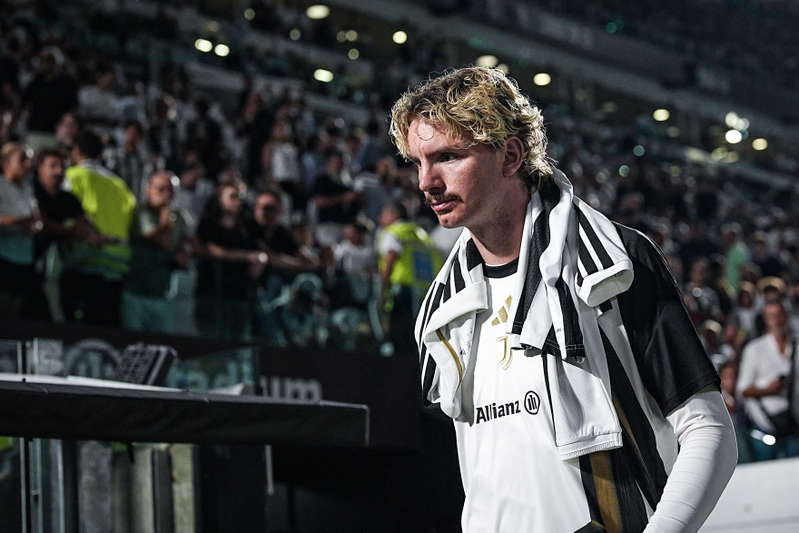


'What I like the most about him is that he has a winning mentality. He always puts in the extra yards and is not afraid of anything,' Pellegrino Matarazzo said of Nicolás González. The Stuttgart head coach made that observation when González was proving himself in Bundesliga 2, a season after his team's relegation from the top flight. That same mentality - fearlessness, relentless work, a refusal to accept the margins others would - is what Argentina now relies on at the World Cup, where late substitutions and split-second decisions determine tournaments.
Rebuilding in Bundesliga 2
Stuttgart were relegated at the end of the 2018/19 season, González's first European campaign. He was young, raw, untested. The conventional wisdom was obvious: a prospect shipped out, a setback to recover from. Most players in that position would have accepted the demotion as a learning experience, a year to grind through and move on. González did not see it that way. He saw the second tier not as a setback but as a testing ground.
In the 2019/20 season, González scored 14 goals as Stuttgart won promotion straight back to the Bundesliga. More than the volume, it was the manner of those goals that mattered. The decision-making speed. The refusal to hesitate. The evidence that Matarazzo had identified something real. In December 2019, at Hannover, González came on as a substitute at half-time. Twelve seconds later, he scored - the fastest substitute goal in Bundesliga 2 history. The moment was brief, but it was everything: proof that preparation and instinct converge when a player refuses to accept margins.
That same hunger showed a year later, in November 2020, when Stuttgart visited Borussia Dortmund. In a 5-1 victory, González scored against elite opposition. He was no longer a prospect rebuilding from relegation. He was a player proving he belonged at the highest level. Matarazzo's assessment had been vindicated. The work ethic was real. The fearlessness was genuine. The mentality had been built in the second tier, not despite it.
Late-game impact at the World Cup
That mentality crystallized at the World Cup. Argentina reached the final unbeaten, winning all five matches while averaging 2.6 goals per game. Consistency at that level demands something specific: fresh legs and clear thinking when fatigue has started to blur opponents' decision-making. Substitutions in tournaments are not about rotating players. They are about introducing tempo and sharpness.
González embodies that value perfectly. He comes on with fresh energy and a direct purpose: find space, make the quick decision, deliver. It is not complicated football. In tournaments, when opponents are running on empty, simplicity and decisiveness win matches. The late-game substitute does not need to be the most technically gifted player on the pitch. He needs to be the sharpest, the one whose mind is fastest when other players' legs are slowing down. That is precisely what González brings.
The arc from a relegated first-year prospect to the player Argentina trusts in World Cup moments is not a redemption story for González alone. It is a vindication of a specific principle in tournament football: the players who refuse to accept the margins others accept, who work in the second tier with the same intensity they would bring to the biggest stage, eventually prove themselves when it matters most. González proved it at Stuttgart. He is proving it now.
González's trajectory from Bundesliga 2 to the World Cup final illustrates something crucial about how players are built and how they win tournaments. He won the Copa América with Argentina in the summer after leaving Stuttgart, a moment of international validation that confirmed his rise. Then came years of club football, the work that builds champions. Now, in 2026, the World Cup final is here. Eighty minutes of tournament intensity, and Argentina will need fresh minds and fresh legs in the closing stages. That is when Matarazzo's original observation about González becomes most valuable. A player relegated in his first European season is now the one Argentina trusts when tournaments are decided in their final moments.
FAQ
How did Nicolás González become Argentina's World Cup late-game weapon?
González was relegated with Stuttgart in his first European season but rebuilt through Bundesliga 2, scoring 14 goals in the 2019/20 promotion season and setting the fastest substitute-goal record in the division. That fearlessness and winning mentality, recognized by head coach Pellegrino Matarazzo, now defines his late-game value at international level.
What is Nicolás González's fastest substitute goal record?
In December 2019 at Hannover, González came on at half-time and scored after just 12 seconds - the fastest substitute goal in Bundesliga 2 history. The moment encapsulated his decision-making speed and willingness to seize opportunities without hesitation.
Why is Nicolás González valuable in World Cup late-game moments?
González brings fresh legs and uncluttered decision-making when opponents are fatigued. Argentina reached the World Cup final unbeaten in five matches, averaging 2.6 goals per game. González's late substitutions help preserve that attacking consistency in critical closing periods.
Written by Jack Mercer with AI-assisted research, cross-checked against 1 outlet. How we work →