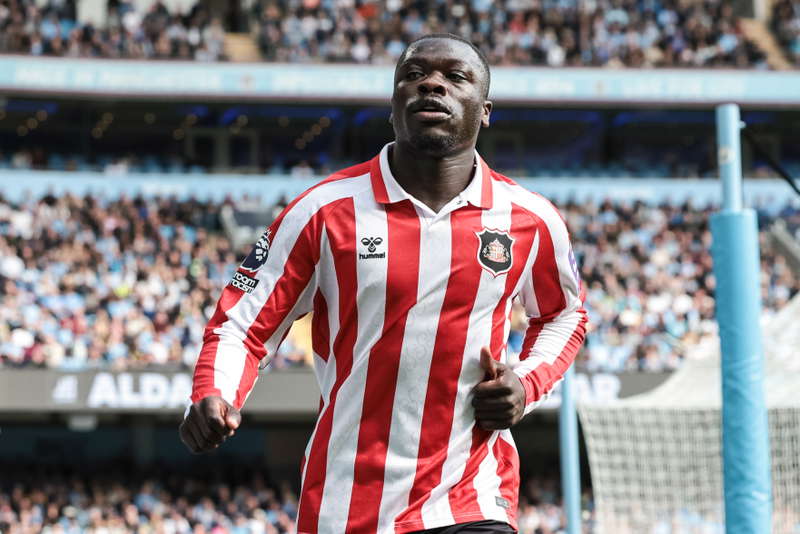


Roly Gregoire has explained for the first time why he stayed silent for 46 years about what followed his Sunderland debut in 1978. In an interview with BBC, Sunderland's first black player describes a breakthrough day that quickly turned into something far darker, with racist abuse, fear for his family and pain he says never fully left him.
Why Gregoire stayed silent for 46 years
The strongest part of Gregoire's account is not just what happened, but how long he felt unable to say it publicly.
"I waited 46 years to break my silence, because I didn't think anyone would listen. I thought I'd take these stories to my maker," Gregoire told bbc.co.uk.
That line gives the story its real weight. This is not a retrospective club memory piece dressed up as something bigger. Gregoire is describing how racism around his time at Sunderland stayed with him for decades, and why he kept it to himself.
He also made clear the damage was not temporary. "Sometimes I wish I'd never played football, to tell you the truth, because some of the pain, I can still feel it."
That is hard to read and harder to dismiss. Players from that era are often spoken about in broad, tidy terms, as if abuse was just part of the background. Gregoire's recollections cut through that. He is talking about emotional injury that outlasted his career.
What happened on his debut day
Gregoire had signed from Fourth Division Halifax Town on Bonfire Night 1977 for £5,000. Two months later, on 2 January 1978, he made his debut for Sunderland in a 2-0 win over Hull City and provided the assist for Gary Rowell.
It should have been the kind of day a young player remembers for the right reasons. Instead, Gregoire says the abuse started around that very moment.
He told bbc.co.uk that after the match, while having a drink with supporters, one asked whether his brothers had been at the game. Later, when he phoned home, he learned what had happened. Gregoire said one of his brothers told him a half brick had been thrown at them, racial abuse had been shouted, and they were chased by "a lynch mob" through the park near the ground.
That detail matters because it explains why the memory of the debut is inseparable from the trauma that followed it. The football part and the abuse were not separate chapters. They were the same day.
The pattern Gregoire describes at Sunderland and beyond
The BBC interview also makes clear this was not one awful incident being revisited in isolation. Gregoire describes a wider pattern of racism and exclusion.
By 1978, one-fifth of the English Football League's 92 clubs had yet to sign a black player. In Sunderland itself, barely 1% of the city's population of nearly 300,000 in 1981 was of African-Caribbean origin. Gregoire's sense of isolation fits that backdrop. "I knew only one other black fellow in Sunderland, he was at the polytechnic."
Some of the moments he recalls came from within football spaces, not outside them. On a pre-season tour in Kenya, he said a player wiped his hands on Gregoire's shirt after children had gathered around him. "I thought that was disgusting," Gregoire said. "It was like he thought those children had disease, and wanted to wipe it on me! Why me? Because I'm black, is that why?"
He also recalled being bypassed by a white hostess at a reception in Kenya while every other player was greeted. Those details matter because they show why his story cannot be reduced to crowd abuse alone. Gregoire is describing a culture that left him exposed in more than one setting.
He said he wanted supporters to understand that emotional toll. "Talking to you, I can feel myself welling up at times but I'm trying to contain myself because I want to get this across so the supporters can understand where I'm coming from."
That is what this account does. It puts a first-person voice to experiences that are often flattened by time or pushed into the background as football moves on.
Gregoire's debut for Sunderland is part of the club's history. So is the racism he says followed it. Forty-six years later, that is finally on the record in his own words.
FAQ
Why did Roly Gregoire wait so long to speak about racism at Sunderland?
Gregoire told BBC he waited 46 years because he did not think anyone would listen. His account describes racist abuse from the day of his 1978 debut and says the pain stayed with him long after he left football.
What happened after Roly Gregoire's Sunderland debut against Hull City?
Gregoire said his debut on 2 January 1978 should have been a breakthrough. He helped create Gary Rowell's goal in a 2-0 win over Hull City, but later learned his brothers had been attacked, with a half brick thrown at them and a group chasing them through a park near the ground.
Was the racism Roly Gregoire faced at Sunderland just one incident?
No. Gregoire's BBC interview describes a pattern rather than one isolated event. Alongside the abuse linked to his debut day, he also recalled discriminatory incidents on a Kenya tour and other experiences that left him feeling isolated.
Why is Roly Gregoire's Sunderland story still important now?
Because it is a first-person account of how racism shaped a player's career and life beyond the pitch. Gregoire says he still feels the pain and even wished he had never played football, which gives the story weight far beyond a historical club anecdote.
Written by Jack Mercer with AI-assisted research, cross-checked against 1 outlet. How we work →