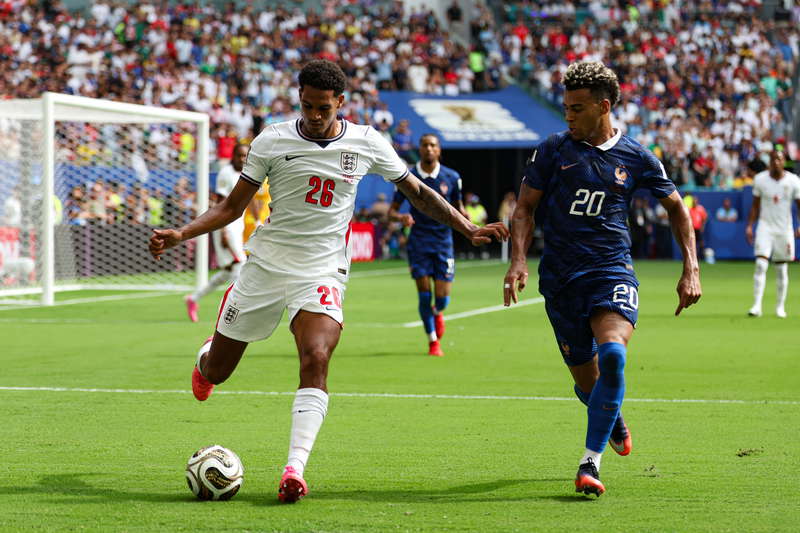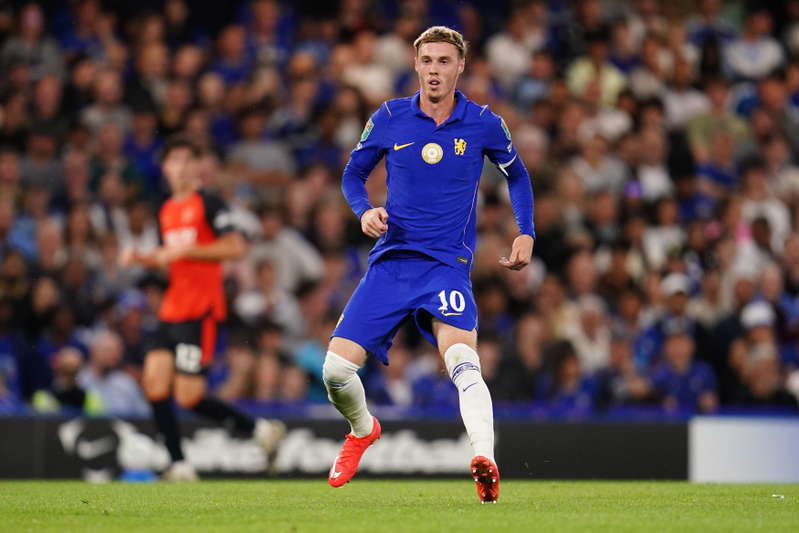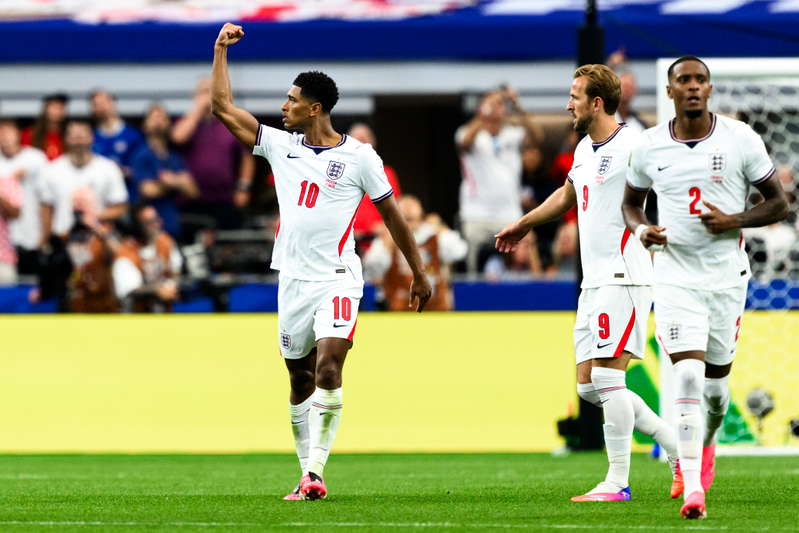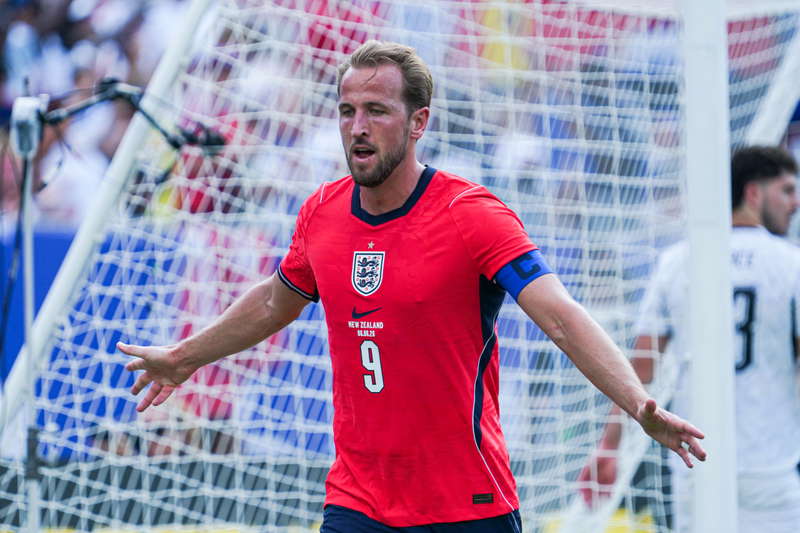



Thomas Tuchel wanted England to function as a team, not just 26 talented players. The cohesion numbers suggest that idea has not fully taken hold yet, especially on the left side and around Harry Kane. Marcus Rashford’s link with Kane sits at 61.12 from 10 interactions, while the wider picture still looks patchy across the flanks and in central combinations.
England’s left side still looks unsettled
Tuchel said the left side had not provided the same quality it showed against Costa Rica. He had looked at that game and thought the unit was solved, then saw Marcus Rashford, Cole Palmer, Eberechi Eze and Djed Spence clicking there. In the tournament, though, he said the first match showed something different, with less connection, less penetration and less verticality.
The numbers fit that frustration. Tuchel started eight different players across the four full-back and wing-back positions, which makes it hard to build any stable pattern on the outside. England’s left-sided relationships have not settled around one trusted formula, and Rashford’s 61.12 with Kane from only 10 interactions is a pretty thin base for a side trying to build around a central striker.
Nico O’Reilly started all but one of England’s games at left-back, but he has not built a reliable cohesion score with Anthony Gordon or Rashford. Djed Spence did better with Gordon from left-back, at 75.45, than he did with Chelsea winger Noni Madueke on the right, at 44.00. That spread says more about how uneven the combinations have been than about any one player.
Kane has only a small group of reliable links
Tuchel’s wider point was never really about individual talent. “I think from day one we were very clear that we are trying to select and build the best possible team, which is not necessarily to select and collect the 26 most talented players,” he said to mirror.co.uk. “Teams win championships, it is as simple as that.”
The data around Kane supports the idea that England still have a narrow core of dependable connections. Only Anthony Gordon, with a cohesion score of 96.01, and Declan Rice, with 97.09, are above 65 for cohesion with him. Jude Bellingham’s figure with Kane is 61.43 from 13 interactions, another sign that England’s central attacking axis is still not as settled as Tuchel wants.
There is a midfield issue too. Rice and Elliot Anderson are at just 50.65 from 39 interactions, which is enough volume to show the relationship is developing, but not enough quality to suggest it is ready-made. England’s recent World Cup results, W-W-W-D-W, show progress without real consistency, and the chemistry data matches that rather than contradicting it.
The squad debate around Cole Palmer sits in the same area. He told Metro he knew what he could have offered, “something different to what the manager has picked,” while Tuchel’s own comments on selection point to a preference for units that click together. The reason Palmer missed out was not pinned to one single factor in the reporting around him, so the safer read is that selection preference and form issues both sat in the mix.
Tuchel’s plan has not failed, but it has not fully landed either. The cleanest evidence is still the left side, where the combinations keep changing and the numbers keep looking unfinished.
England face Norway next, with Erling Haaland in the opposition attack. Dan Burn’s cameo against Mexico gave Tuchel another option, and Burn made 8 defensive contributions in 26 minutes off the bench, including 6 clearances, a World Cup record for a late substitute.
FAQ
Why is Thomas Tuchel saying England still need more chemistry?
Tuchel wanted England to function as a team, not just a collection of talented players. The cohesion data backs up his concern, with weak links on the left side and only a few strong connections around Harry Kane. Marcus Rashford’s cohesion score with Kane is 61.12 from 10 interactions, while Anthony Gordon and Declan Rice are the only players above 65 for cohesion with Kane.
How weak is England’s left side under Thomas Tuchel?
Tuchel said the left side has not provided the same quality as it did against Costa Rica, and the data supports that concern. England started eight different players across the four full-back and wing-back positions. Marcus Rashford’s cohesion score with Harry Kane is 61.12 from only 10 interactions, which shows the relationship is still not reliable.
Can England rely on Harry Kane’s links with the rest of the team?
Only a small group are truly connecting with Kane. Anthony Gordon’s cohesion score with him is 96.01 and Declan Rice’s is 97.09, but Marcus Rashford’s sits at 61.12 and Jude Bellingham’s at 61.43. That suggests England still have a narrow set of dependable attacking links around their No. 9.
Written by Jack Mercer with AI-assisted research, cross-checked against 3 outlets. How we work →