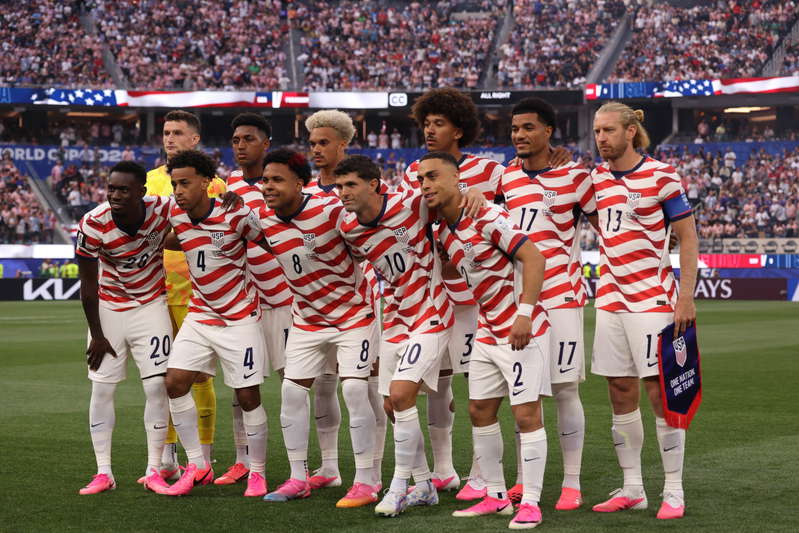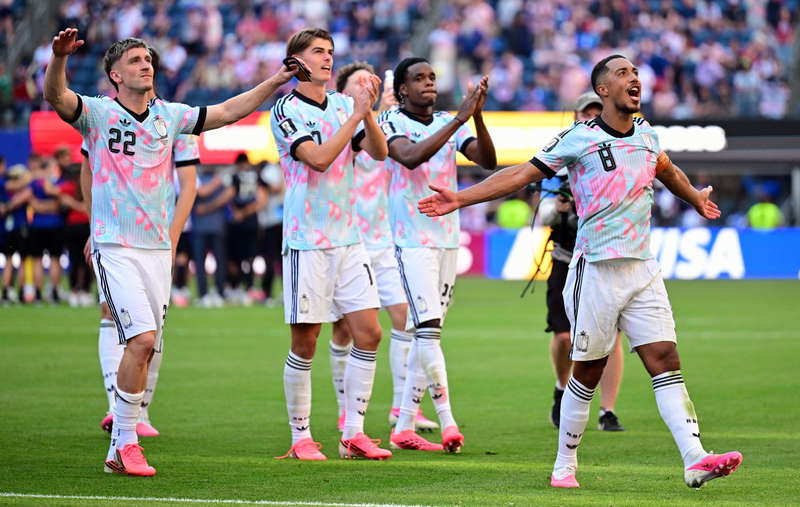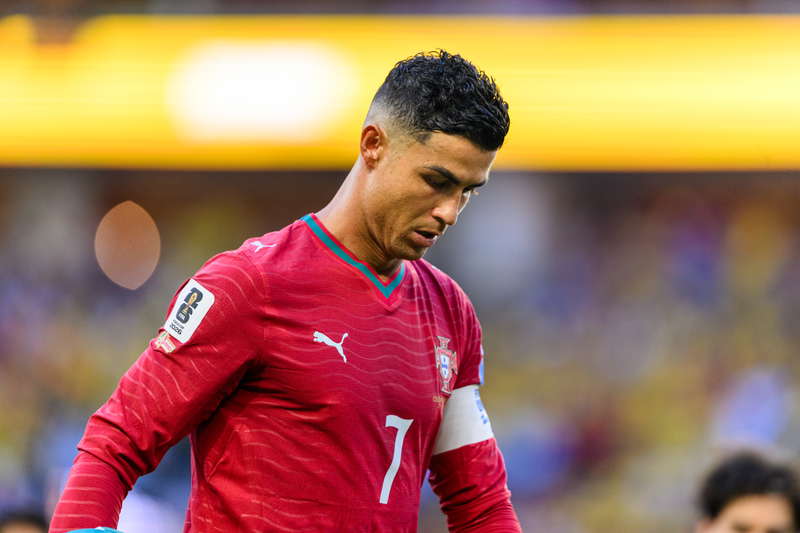


In a World Cup round of 16 match on July 7, Belgium defeated USA 4-1, but the player ratings crystallized why the gap was so stark. Charles De Ketelaere earned an 8.3, Belgium's highest individual mark of the night, while Tim Ream received a 5.6. Those two ratings, separated by nearly three points, told the story of a match that was decided by precision against vulnerability.
De Ketelaere's clinical dominance
De Ketelaere's 8.3 rating came from two goals on three shots on target, both clinical finishes. The first arrived in the 9th minute when he collected a breakaway assist from Nicolas Raskin and finished under pressure with composure. The second came in the 33rd minute from a Leandro Trossard cross, a header that doubled Belgium's lead at a moment when the match was already slipping away from USA. By that point, Belgium had seized control and established a cushion the Americans could not overcome.
The 8.3 rating reflected the full scope of his dominance. World Cup knockout football is decided by moments - by whether a player can stay composed in the 9th minute or find space in the 33rd. De Ketelaere did both. He was not dominating through volume or territorial control; he was creating his chances through intelligent movement and then converting them with the precision these tournaments demand. Two shots on target became two goals. That efficiency was the mechanism behind the rating.
Ream's vulnerability
Rea's 5.6 was the inverse. The 38-year-old centerback won just 1 duel out of 5 attempts. More critically, both of De Ketelaere's header goals came against him specifically. Ream was not caught by tactical miscues or organizational confusion; he was losing the physical battle. The vertical space that De Ketelaere exploited came because the aging defender could not get high enough, could not recover when beaten, could not command the air with the presence the position demands.
The exposure was exactly what observers had feared before the tournament. As NBC Sports noted after the match: "The worry was always that the 38-year-old would be exposed against top-tier attacking talent, and it didn't take much against Belgium." By halftime, that worry had become reality. Ream was not playing badly in some abstract sense; he was facing a mismatch that 90 minutes of discipline and positioning could not overcome.
Freeman's standout, Pulisic's constraint
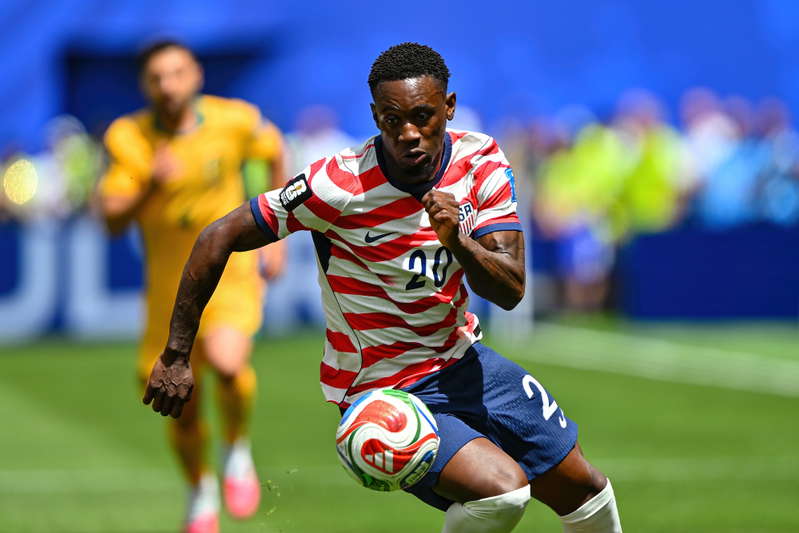
Yet the defensive picture was not uniformly bleak. Alexander Freeman, 21, posted a 7.0 rating with 10 duel wins out of 13 attempts and 2 successful dribbles across 92 minutes. Freeman competed for every ball, showed the alertness and recovery speed USA needed. His performance suggested that the gulf was not one of overall athleticism so much as experience and the compounding effect of senior players being outmatched. With Freeman's intensity replicated across the backline, USA might still have lost given Belgium's finishing, but the performance would have looked different.
The attacking picture was equally constraining. Christian Pulisic, USA's primary creator, left the field after 59 minutes with zero chances created. A calf injury from the Paraguay group-stage match lingered, robbing him of the dynamism USA desperately needed. Without Pulisic threading passes and finding space in congested midfields, the team had no creative relief from Belgium's pressure. Malik Tillman scored a free-kick in the 31st minute to make it 2-1 briefly, but one goal in isolation could not sustain the American team through 90 minutes against this level.
In goal, M. Freese faced an impossible situation. His 6.3 rating was respectable given the circumstances - a goalkeeper cannot look commanding when his defense is under sustained assault. But four goals conceded, even from limited opportunities, added another layer to USA's overall performance.
De Ketelaere's 8.3 represented clinical superiority. Ream's 5.6 was age meeting elite pace and precision. Freeman's 7.0 was evidence of capability isolated within a structure that could not support it. Belgium advanced through superior finishing meeting vulnerable defending. The 4-1 scoreline was emphatic, but the individual ratings (8.3 and 5.6) captured the gap between these sides.
FAQ
Why did USA lose so heavily to Belgium at the World Cup?
Charles De Ketelaere's clinical finishing (8.3 rating, 2 goals on 3 shots) exposed Tim Ream's defensive vulnerability (5.6 rating, won 1 of 5 duels). Christian Pulisic's lingering calf injury left USA without creative spark. Alexander Freeman's 7.0 rating showed what the defense needed but lacked across the backline.
How did Belgium's Charles De Ketelaere perform against USA?
De Ketelaere earned Belgium's highest rating (8.3) with two clinical goals. He scored in the 9th minute on a breakaway assisted by Raskin and in the 33rd minute on a header from Trossard's cross. He converted 2 goals on 3 shots on target, exemplifying Belgium's dominance.
Was Tim Ream's age the reason USA lost to Belgium?
Ream's 5.6 rating reflected his physical mismatch - he won just 1 of 5 defensive duels. But the gulf was structural. Christian Pulisic created zero chances in 59 minutes due to a calf injury. Alexander Freeman's 7.0 rating (10 of 13 duels) proved the backline could compete individually but struggled with overall support.
What was Alexander Freeman's performance for USA?
Freeman posted a 7.0 rating with 10 duel wins out of 13 attempts and 2 successful dribbles in 92 minutes. The 21-year-old was USA's lone defensive bright spot, competing for every ball while older teammates struggled against Belgium's precision.
Written by Sam Whitfield with AI-assisted research, cross-checked against 3 outlets. How we work →