

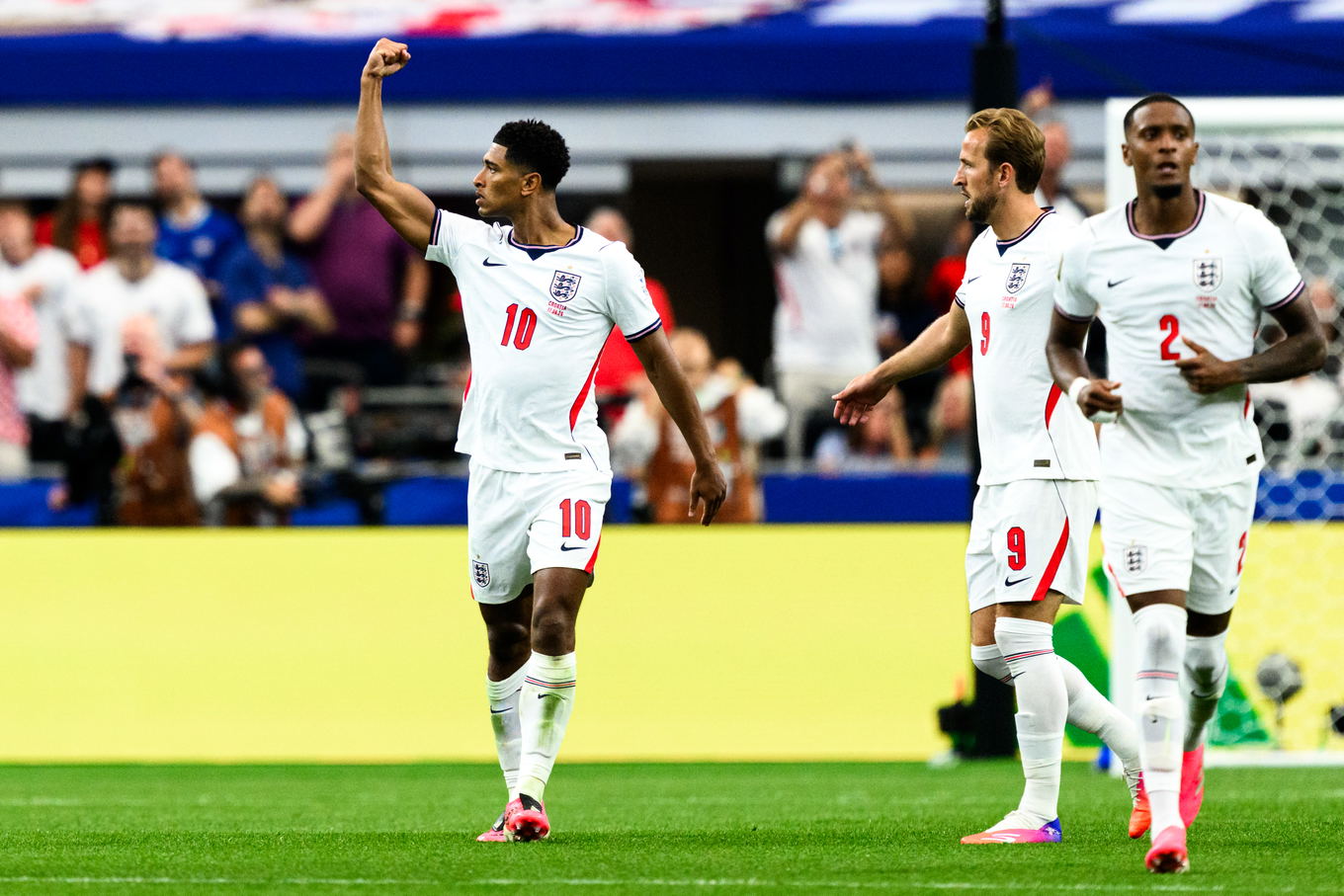
England beat Congo DR 1-2 in the World Cup on 1 July, with Harry Kane scoring both goals, but the scoreline was only part of the story. The bigger issue for Thomas Tuchel was how often England's press lost its shape. Congo DR found a repeatable route through it, and Mexico now head into the last 16 with a useful template.
The core problem was not hard to spot in England vs Congo DR. England's 2-1-2-1 left two players at the top of the press, while Sebastien Desabre changed Congo DR from their usual 5-3-2 into a 4-4-2 that altered the spacing straight away.
Congo DR's central overload
Desabre's switch was aggressive in a smart way. Congo DR used the goalkeeper plus three players centrally in build-up, which meant England's first line was outnumbered before the ball even moved into midfield. That is a simple overload, but it was enough to keep forcing Tuchel's side into awkward decisions.
Push the front two on and the distances behind them started to stretch. Hold them back and Congo DR could settle into possession and play through the middle. England spent too much of the game between those two ideas, and that halfway house is usually where a press falls apart.
Tuchel himself acknowledged the issue in his BBC interview. He said: "What he cannot do is end up in between the two, like England often did on Wednesday."
That line fits the game closely. England were too aggressive to stay compact, but too passive to press cleanly. Congo DR were not just surviving pressure, they were dictating where it landed.
There is an obvious warning for the next round. Javier Aguirre does not need to copy every detail from Congo DR, but he will have seen the same openings. If Mexico can pin England's front line and create the same spare man centrally, Tuchel's side will be back in the same problem very quickly.
England's better moments out wide
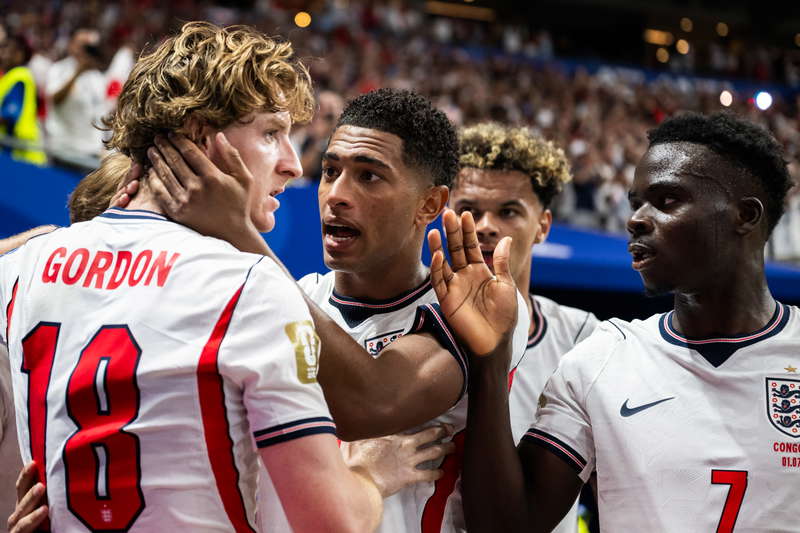
England were still dangerous when their wide combinations clicked, and that is the encouraging part for Tuchel. Kane's two goals decided the match, and Anthony Gordon finished with 2 assists, but England's cleaner attacking passages came from movement rather than volume.
The equaliser was the clearest example. Bukayo Saka drew out Congo DR's full-back, Eberechi Eze's diagonal run pulled a centre-back away, and Declan Rice filled the space from right-back. That is a much healthier pattern than forcing play through a crowded centre, because it moved defenders first and attacked the gap second.
Eze came on after a key hydration break, and England looked more coherent once those rotations started to form. Tuchel said the alternative to sitting deeper is "to stick to a high-pressing approach but to tweak how that is executed." That feels like the likelier route, because England did show enough on the ball to suggest the structure does not need ripping up.
There were also individual hints that the right side can be productive. Noni Madueke posted a 7.9 rating, England's highest among the starting outfield players, while Elliot Anderson recorded a 7.6 overall. Those numbers are secondary to the bigger tactical point, but they support the idea that England's best work came when the wide units connected properly.
Mexico's route into the last 16
This is why the Congo DR game should not be filed away as a routine group-stage win. England got the result they needed at 2-1, yet the pressing structure still looks unsettled against a side willing to spread the pitch and play through the first wave.
Mexico will not need much encouragement to test that again. Congo DR's 1-2-2 showed that England can be dragged into poor spacing, especially when the front press and midfield line stop moving as one. That is the tactical problem Tuchel has to solve before the knockout game.
England have enough attacking quality to beat good sides anyway, and Kane already showed that with his 2 goals. But the cleaner reading from this match is that Congo DR offered Mexico a useful blueprint, and Tuchel now has a last-16 tie to prepare with that evidence fresh.
FAQ
Why were England vulnerable against Congo DR before facing Mexico?
England won 2-1, but Congo DR repeatedly found space against the press. Sebastien Desabre switched his side into a 4-4-2 and built up with the goalkeeper plus three central players, which outnumbered England's front two in a 4-2-3-1. That left Thomas Tuchel's side pressing without enough compactness.
How did Congo DR's shape cause problems for England tactically?
Congo DR did not use their usual 5-3-2. Their 4-4-2 changed the spacing and gave them a cleaner route through England's first line. With the goalkeeper and three players central in build-up, they forced England to choose between pushing on and leaving gaps or dropping off and giving away territory.
Can Mexico exploit the same England weakness in the last 16?
The warning signs are there. England spent long spells caught between a full press and a passive block against Congo DR, and that is the sort of uncertainty Mexico will study. Tuchel has already admitted England cannot keep ending up in between the two approaches.
What did England do well despite the tactical problems against Congo DR?
England still won through Harry Kane's two goals, and their best attacking moments came when the wide rotations clicked. For the equaliser, Bukayo Saka pulled out the full-back, Eberechi Eze's diagonal run dragged a centre-back away, and Declan Rice attacked the space from right-back.
Written by Jack Mercer with AI-assisted research, cross-checked against 3 outlets. How we work →