

US Soccer is opening a $228 million national training base outside Atlanta at a useful moment and a slightly awkward one. The Arthur M Blank training complex is meant to give the federation a proper home and speed up development ahead of the 2026 World Cup. At the same time, fresh reporting around hotel demand suggests the wider tournament economy may be less straightforward than the sales pitch.
JT Batson told bbc.co.uk to “think of it as St George’s Park, but slightly bigger and obviously newer”. That comparison is not accidental. US Soccer is trying to build the kind of central hub that has shaped England's national setup since St George’s Park opened in 2012.
Why US Soccer sees this as a structural change
The scale of the project is the first point. The Arthur M Blank training complex is a $228 million facility outside Atlanta, and the site is described as a 200-acre national training centre. This is not a cosmetic upgrade or a temporary World Cup base camp. It is being sold as a permanent centre of gravity for the sport in the country.
Batson made that ambition clear in his second quote to bbc.co.uk: “We're really big, both geographically and in numbers of people. We think that really having a home for the first time for soccer in America is going to be transformative for us.”
That feels like the right way to read the project. Not as a guarantee of better results, because the sourcing does not support that, but as an attempt to fix a structural issue. For a federation covering a country as large as the United States, the lack of one clear national base has always looked like a disadvantage. A central training centre cannot solve every football problem, but it can make planning, coaching and identity more coherent.
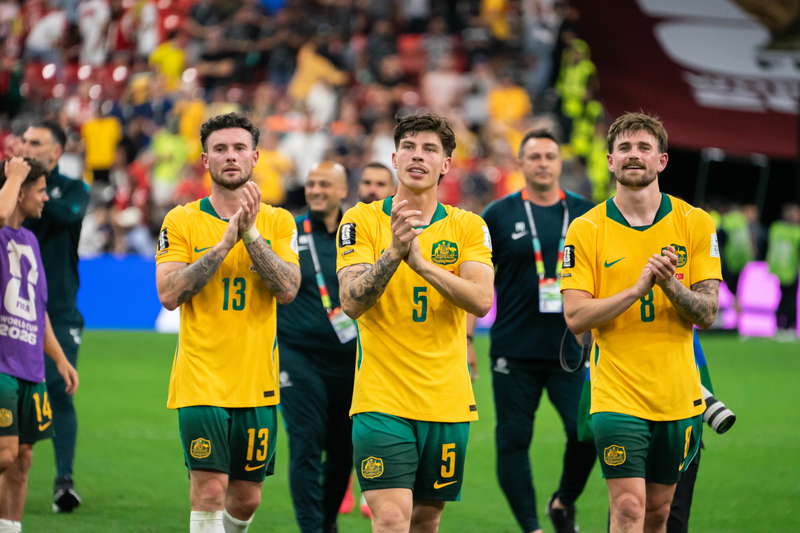
The timing matters too. USA are already listed with a World Cup opener against Paraguay on 2026-06-13 01:00:00+00, followed by Australia on 2026-06-19 19:00:00+00. Their final listed group game is against Türkiye on 2026-06-26 02:00:00+00. The brief also lists USA as top of Group D with 0 points after 0 games, which is administrative rather than revealing, but it underlines how close the tournament now feels in planning terms.
So the obvious point is this: US Soccer is not building for a vague future. It is trying to put a national football home in place with a home World Cup already on the calendar.
Why the World Cup backdrop is more complicated than the hype
That does not mean every part of the 2026 picture looks clean. The strongest secondary angle in the brief is the disconnect between the World Cup’s scale and some of the early demand signals around travel and accommodation.
Rosanna Maietta told independent.co.uk: “Hotels across host markets have spent years preparing for the World Cup, and while there is real excitement, the data points to a more nuanced outlook”. That is a useful way to frame it because it avoids the lazy overreaction. The issue is not collapse. It is softer demand than many expected at this stage.
The survey detail is harder to ignore. Eighty per cent of respondents said hotel bookings are tracking below initial forecasts. Another 65 to 70 per cent cited visa barriers and geopolitical concerns. Those figures do not prove a single cause, and they do not cancel the size of the event, but they do challenge the assumption that demand is automatically matching the noise.
There are still signs of scale. Five million tickets have been sold. That is why the broader economic debate has to be handled properly rather than pushed to one extreme. The World Cup can still be a major opportunity while parts of the market remain softer than expected.
What this means for the project now
The new centre and the mixed demand story are not really in conflict. They speak to different timelines. The Arthur M Blank complex is a long-term football investment, one modelled in part on what England built in 2012. The hotel-booking data is a near-term business read on how the tournament is shaping up.
If anything, that makes US Soccer’s strategy look more sensible, not less. Building a lasting base is the kind of decision that still stands even if the World Cup economy arrives with a few caveats. For USA, the important question is whether a first true home can improve how the federation prepares, develops and organises itself.
That is the stronger story here. The World Cup may still deliver a broad boost, and the booking numbers suggest some caution around that claim. The training centre, though, is easier to defend as a serious attempt to change the sport’s infrastructure in the country. USA open their listed World Cup schedule against Paraguay on 2026-06-13 01:00:00+00, which gives the new base a very real deadline.
FAQ
Why is US Soccer building a new national training centre now?
US Soccer is using the new Arthur M Blank training complex outside Atlanta as a long-term base ahead of the 2026 World Cup. The 200-acre site is being framed as a first true home for soccer in America, with JT Batson saying the federation expects it to be transformative.
How is US Soccer’s new training centre linked to St George’s Park?
US Soccer is openly borrowing from the St George’s Park model. JT Batson described the new base as "think of it as St George’s Park, but slightly bigger and obviously newer." The comparison matters because St George’s Park has been [England](club:england)'s national football centre since it opened in 2012.
Will the 2026 World Cup still be a big economic boost for US host cities?
The opportunity is still obvious, but the early picture is less straightforward than the hype. A hotel industry survey said 80 per cent of respondents reported bookings below initial forecasts, while 65 to 70 per cent cited visa barriers and geopolitical concerns. That does not rule out a major boost, but it does make the outlook more mixed.
When does USA start its 2026 World Cup schedule?
[USA](club:usa) open their listed World Cup fixtures against Paraguay on 2026-06-13 01:00:00+00. The schedule in the brief also includes Australia on 2026-06-19 19:00:00+00 and Türkiye on 2026-06-26 02:00:00+00, which sharpens the short-term relevance of the new training base.
Written by Jack Mercer with AI-assisted research, cross-checked against 2 outlets. How we work →