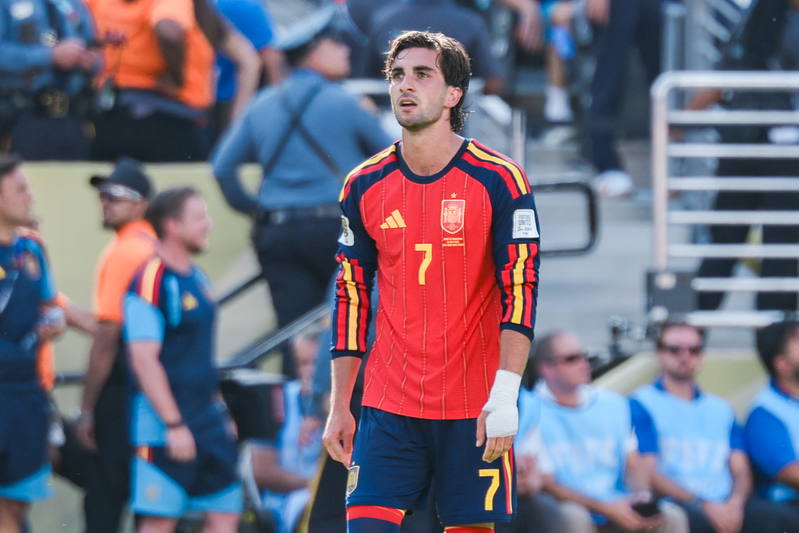
Spain's World Cup final win over Argentina was a massive television event as well as a football one. BBC Sport reported a peak audience of 15.8 million on BBC One and BBC iPlayer, with the broadcast taking a 64% share of all TV viewing. Ferran Torres' extra-time strike sealed Spain's second World Cup triumph, but the scale of the audience is the clearest part of the story.
BBC Sport put it plainly: "Spain's victory in Sunday's World Cup final attracts a peak audience of 15.8 million on BBC One and BBC iPlayer." For any match, that is a serious number. For a final decided late, it shows how completely the game held the public through to its decisive moment.
The numbers behind the final's reach
The peak figure matters on its own, but it looks even stronger next to the rest of the viewing data. The average audience for the match was 13.9 million, which means this was not just a late spike caused by people dropping in for extra time. A huge audience was there across the game.
Then there is the 64% share. BBC Sport said: "The BBC enjoyed a 64% share of all TV viewing for the match, with an average of 13.9m watching as Ferran Torres' extra-time strike sealed Spain's second World Cup triumph." A number like that tells you the final did not merely perform well for football. It dominated television full stop.
That distinction is important because football audiences can sometimes look impressive in isolation while still sitting inside a crowded viewing landscape. This one did not. Nearly two thirds of all TV viewing went to the BBC's coverage of the final, which puts the match firmly in major-event territory.
It also helps explain why the audience angle stands slightly above the on-pitch recap here. Spain winning the World Cup is the core sporting news, obviously, but the viewing figures show the final landed far beyond supporters of either team. When a single broadcast commands a 64% share, it has moved into national-event territory rather than standard sports coverage.
Ferran Torres supplied the final moment
That does not mean the football itself should be treated as background. Torres delivered the decisive act, scoring in extra time to seal Spain's second World Cup triumph. The late goal gave the match the kind of finish broadcasters want: tension held deep into the night, then a clear final swing.
There is a limit to how far anyone should push that link, though. The reporting supports that Torres' strike sealed the win and framed the closing moment of the broadcast. It does not support the idea that he alone created the audience peak. The safer reading is simpler: a World Cup final already had a vast audience, and a late decisive goal helped cap it.
Torres' contribution still deserves its place in the story. He made 5 World Cup appearances in this run, and the last one delivered the tournament's biggest moment for Spain. In football terms, that is the image people will remember. In broadcast terms, it was the perfect closing scene for a match that had already pulled in a huge public audience.
Spain's win became a broadcast event
The strongest conclusion from the available numbers is that this final broke out of the usual football audience bubble. Spain beat Argentina to lift the trophy, but the BBC figures show something broader: a peak of 15.8 million, an average of 13.9 million and a 64% share of all TV viewing.
That is why the result and the reach belong together. Spain delivered the football story, Torres supplied the extra-time winner, and the BBC got the kind of audience most broadcasters only see for the biggest live events.
For the BBC, the final will be remembered not just for Spain's second World Cup triumph, but for a night when 15.8 million viewers were watching on BBC One and BBC iPlayer.
FAQ
Why was the World Cup final such a big audience draw on the BBC?
The final functioned as both a football event and a major television event. Spain's win over Argentina pulled a peak audience of 15.8 million on BBC One and BBC iPlayer, while the broadcast took a 64% share of all TV viewing. The average audience was also 13.9 million, which shows viewers stayed with the match rather than only tuning in for the finish.
How many people watched Spain's World Cup final win on BBC One and iPlayer?
BBC Sport reported that Spain's World Cup final victory attracted a peak audience of 15.8 million on BBC One and BBC iPlayer. The average audience across the match was 13.9 million, and the coverage claimed 64% of all TV viewing during the game.
Did Ferran Torres score the winning goal in Spain's World Cup final?
Ferran Torres scored the extra-time strike that sealed Spain's second World Cup triumph. The reporting around the audience figures ties that decisive late moment to the biggest stage of the broadcast, though it does not claim Torres alone drove the audience peak.
Was Spain v Argentina one of the BBC's biggest sports broadcasts of the year?
The available figures make a strong case that it was a huge BBC sports occasion. Spain against Argentina reached a peak audience of 15.8 million and took a 64% share of all TV viewing, which points to a broadcast that dominated the evening well beyond the usual football audience.
- bbc.co.uk
- givemesport.com
- independent.co.uk
- metro.co.uk
- mirror.co.uk
- nbcsports.com
- si.com
- sportsmole.co.uk
- standard.co.uk
- teamtalk.com
Written by Daniel Hartley with AI-assisted research, cross-checked against 10 outlets. How we work →