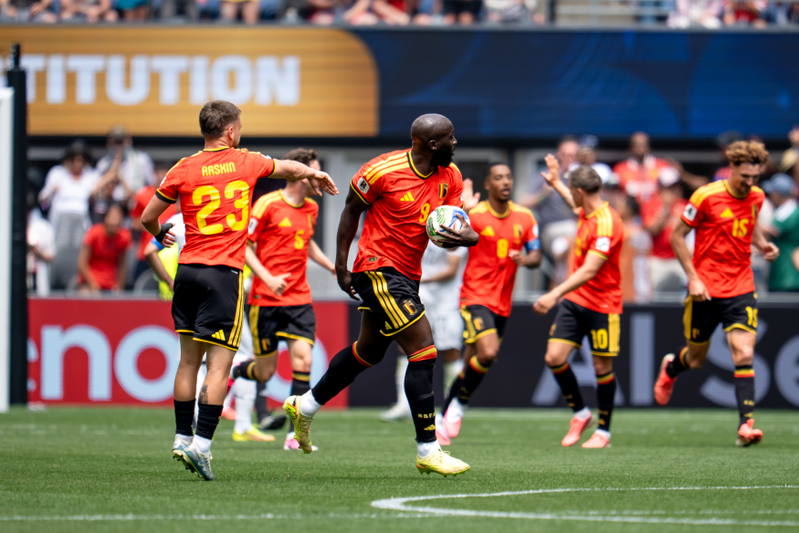


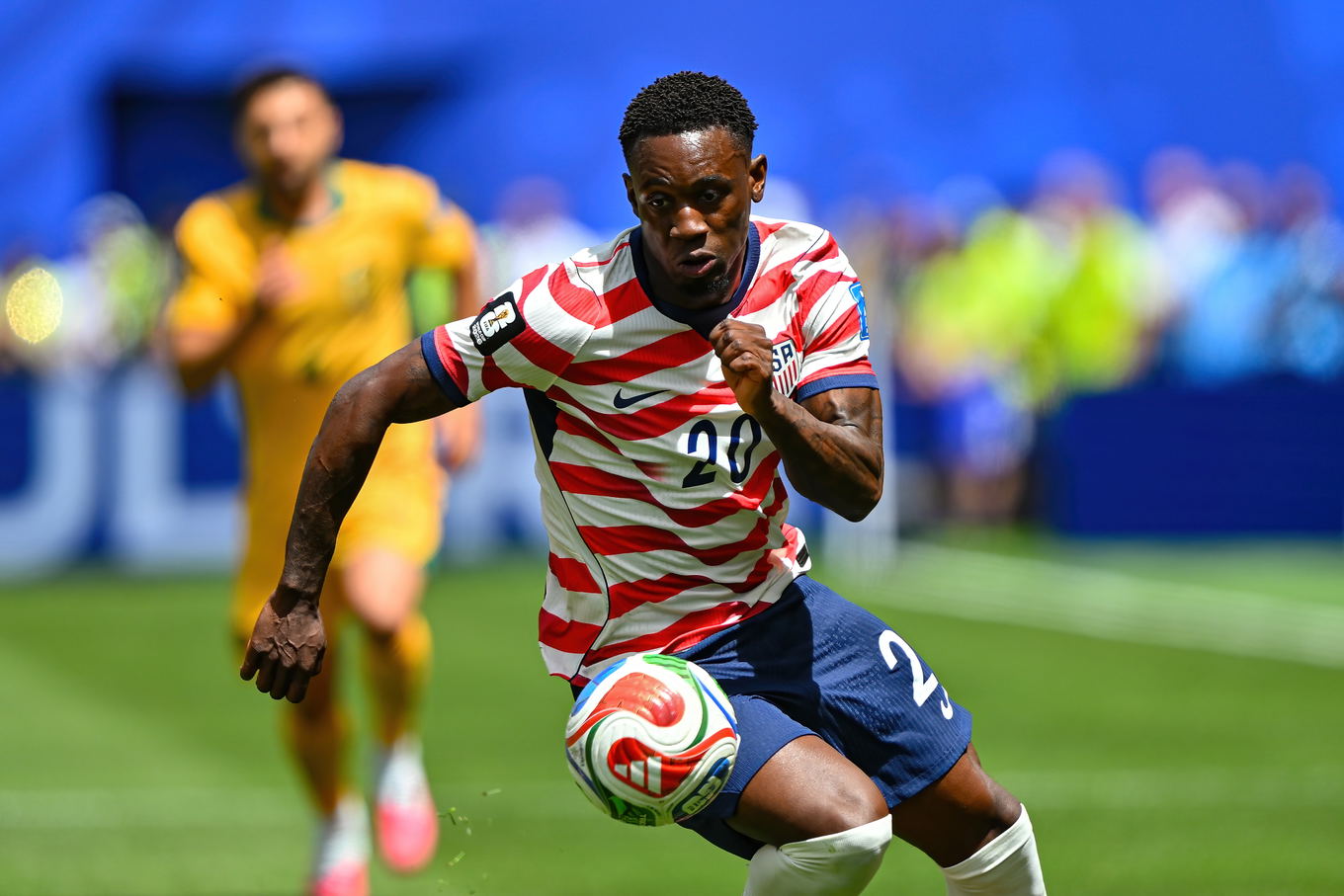
"When that decision's overturned, of course it's going to be controversial," Folarin Balogun told givemesport.com. His point was straightforward enough. FIFA suspended his one-game ban for 12 months, which allowed the USA forward to face Belgium in the round of 16, and the noise around that ruling was always going to follow him into the game.
Balogun was sent off against Bosnia and Herzegovina after a red-card review before the suspension was later paused. The Belgian federation appealed after the ruling was announced on Sunday, but that appeal was denied on Monday morning. So the debate quickly moved beyond the incident itself and onto the decision-making around it.
Balogun's response to the uproar
Balogun did not try to pretend the reaction was overblown. He accepted it as the obvious consequence of an overturned decision.
Speaking to givemesport.com, he said: "When that decision's overturned, of course it's going to be controversial. So for me, it's something that it didn't really surprise me too much. But as a player, my job is just to go out there and focus on my job."
That answer fits the reality of his tournament. Balogun has made 4 World Cup appearances, scored 3 goals and played 324 minutes, so his availability was always going to be a major talking point for the USA. He was not some peripheral squad player slipping back into the team unnoticed.
There is still a wording dispute around the ruling itself. Some reporting has framed it as an overturned decision, while other accounts are closer to a suspension or pause of the ban rather than a permanent erasure. The practical effect was clear enough: Balogun was eligible to play against Belgium.
Pochettino and Garcia reject the blame line
Mauricio Pochettino was the angriest voice after the backlash. He told rte.ie: "I am so frustrated and disappointed with people who are supposed to understand the situation. It's not an excuse, it wasn't our day. But in a personal way, what is the point to send a bad message or to threaten? To mix this, to talk about the ethic, talk about the integrity?"
That frustration was not just about criticism of the ruling. It was also about how quickly Balogun became the face of a decision he did not make. Pochettino's position is easy enough to follow there, even if the wider argument around FIFA's handling of the case is not going away.
Rudi Garcia, from the other side, made a similar point about the player himself. He told givemesport.com: "Flo Balogun came to talk to me. I liked that. It’s not his fault. He is not the one to blame, and I told him that. I appreciate that he came over to talk to me."
That is probably the most sensible line in the whole episode. People can argue over FIFA's process, the appeal, and the precedent it sets. Pinning the whole affair on Balogun makes far less sense when his only role was to be available after the suspension was put on hold for 12 months.
Even inside the USA camp, the timing sounded chaotic. Tyler Adams said the team did not learn about the suspension until the news broke on Sunday. That hardly helps the image of a clean, well-explained process.
The bigger row is not disappearing
Balogun's comments have kept the focus on the player, but the broader backlash is really about governance. Laura McAllister warned on BBC Sport: "You're creating an absolute cesspit for the future because anyone can appeal. Any political leader could potentially pick up the phone and say there's a precedent for changing a punishment awarded to a player and I think it's extremely dangerous."
Javier Tebas went even further on BBC Sport, accusing parts of football of accepting too much silence around the issue. Those objections are serious, and they deserve to be treated separately from the player's own conduct.
Balogun's line was calmer than the reaction around him, and probably smarter too. He did not deny the controversy, and he did not try to solve it in public. After Sunday's ruling and Monday morning's failed Belgian appeal, his part was to play, and the argument over FIFA's decision is still sitting well beyond him.
FAQ
Why was Folarin Balogun allowed to play against Belgium?
FIFA suspended Balogun's one-game ban for 12 months, which allowed him to play for the USA against Belgium in the round of 16. Reporting around the ruling has not used identical language, with some describing it as a suspension or pause rather than an outright removal, but the key outcome was that he was available.
What did Folarin Balogun say about the red card controversy?
Balogun said the backlash did not surprise him. Speaking to givemesport.com, he said that once the decision was overturned, controversy was inevitable, and that his job as a player was simply to focus on playing.
Did Mauricio Pochettino defend Folarin Balogun after the FIFA decision?
Yes. Pochettino pushed back hard on the reaction, saying he was frustrated and disappointed by criticism from people who should understand the situation. He questioned why the debate had turned into attacks on ethics and integrity.
Did Belgium object to the Balogun ruling?
Yes. The Belgian federation appealed after the ruling was announced on Sunday, but that appeal was denied on Monday morning. Belgium coach Rudi Garcia still said after the match that Balogun was not the one to blame and praised him for coming over to speak.
- bbc.co.uk
- express.co.uk
- givemesport.com
- goal.com
- independent.co.uk
- metro.co.uk
- rte.ie
- si.com
- standard.co.uk
- talksport.com
Written by Sam Whitfield with AI-assisted research, cross-checked against 10 outlets. How we work →