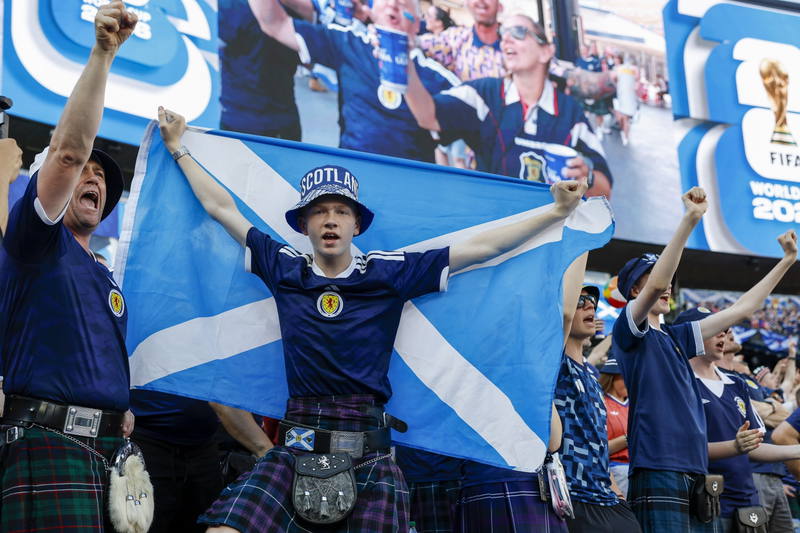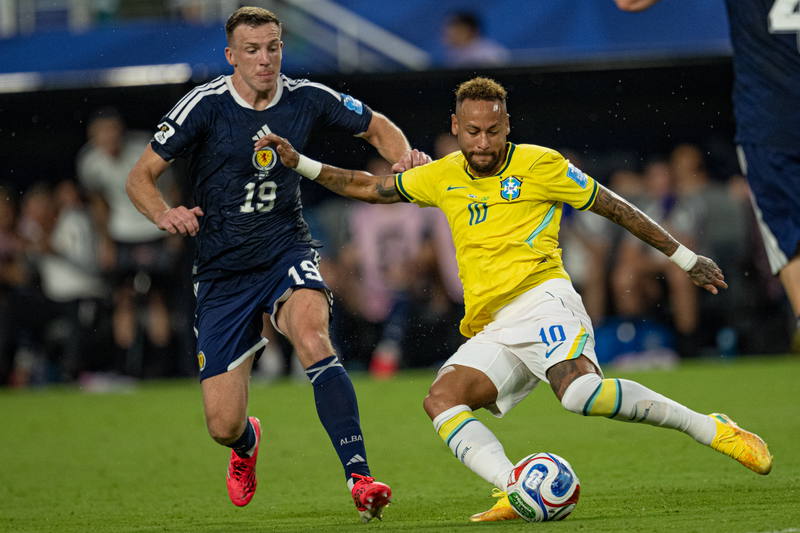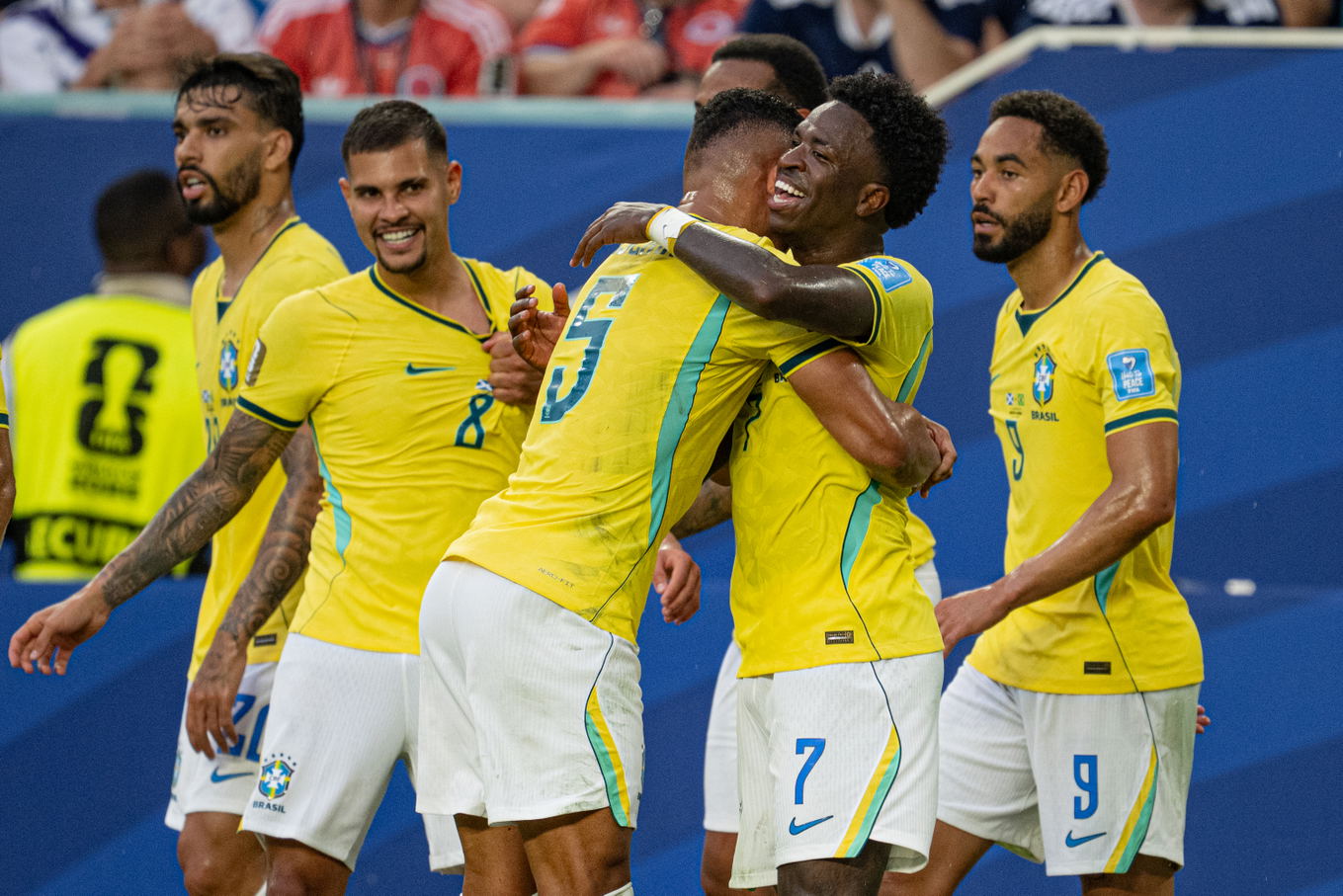
Steve Clarke's admission, made in the aftermath of Miami, distilled a night of defensive catastrophe into five words. "For sure I think we're going home," the Scotland head coach told broadcasters, having just watched Brazil dismantle his team 3-0 in the World Cup 2026 group stage. Clarke spoke for just 23 seconds during his initial BBC post-match interview before walking away without further comment—a gesture that conveyed what words could not. The mathematics had shifted decisively. Scotland now sits seventh among twelve third-place teams in the expanded World Cup format, with nine nations still to complete their group campaigns. The knockout path that looked narrow had become nearly closed.
Vinicius and individual errors
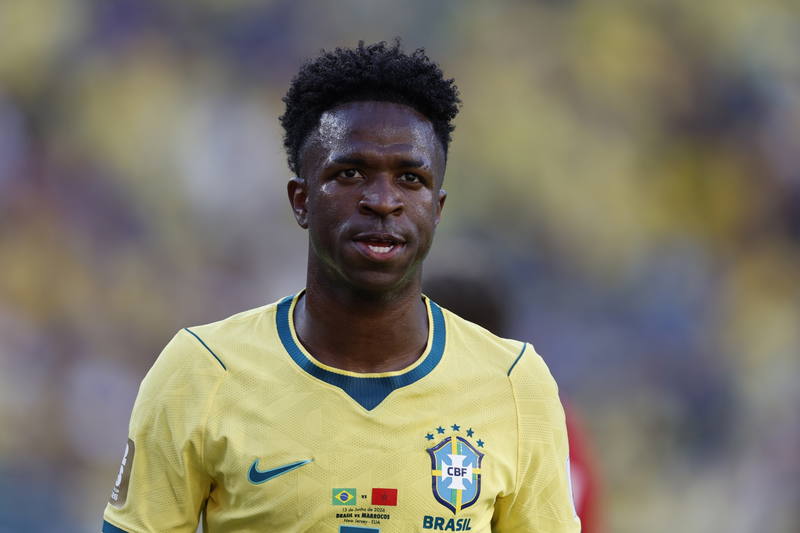
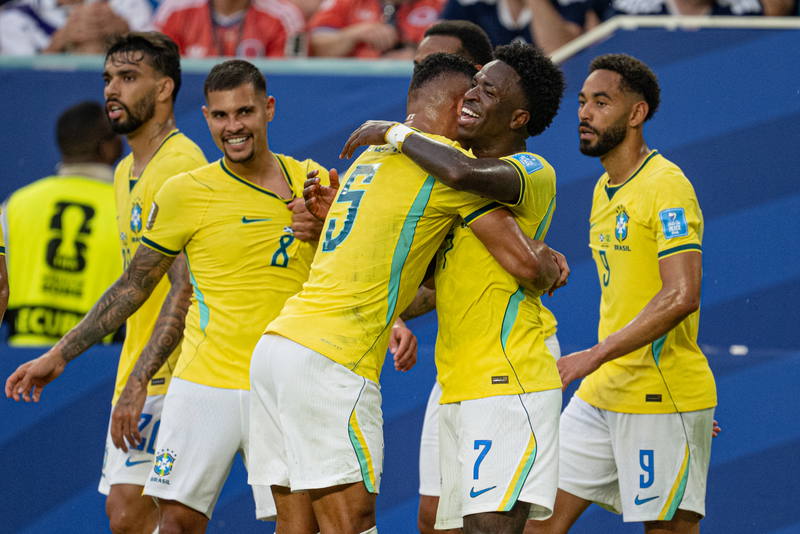
The evening unraveled from the opening seconds. In the 7th minute, Scott McKenna's pass error in Scotland's half gifted possession to Brazil, and Vinícius Júnior converted with the ruthlessness that separates elite sides from contenders. The Brazil winger, operating at a 9.0 rating—the highest on the pitch—added a second before halftime at 45+3 minutes, leaving Scotland chasing the game before the interval ended.
Matheus Cunha sealed the rout in the 60th minute, a clinical third that reflected Brazil's efficient finishing against an opponent punishing itself. The scoreline was no flattery to the victors, but it did obscure one truth: Scotland possessed quality they failed to protect. Goalkeeper Angus Gunn rated 8.2 and made five crucial saves—the sole genuine bright spot in a performance built on individual lapses rather than tactical collapse. Lewis Ferguson, Scotland's midfielder, completed 91 passes and rated 7.9, evidence that the problem was structural, not systemic. When elite opponents punish basic errors with such clinical precision, quality in midfield becomes irrelevant.
Nathan Patterson endured a difficult evening against Vinícius Júnior, rating 6.47 across the tournament as he contended with one of the competition's standout attackers in Miami's heat.
The mathematics and McGinn's resignation
John McGinn articulated what Scotland's players were processing in the moments after the final whistle. "We lose poor goals at poor times against a team that can punish you with quality. The lads are gutted, we fell short on quality but we gave it absolutely everything. It's unlikely [that we qualify] but we'll wait and see."
The word "unlikely" carried the weight of resignation. Scotland had arrived assured that third place was within reach, having beaten Haiti convincingly in their first match. But then came Brazil—a team ranked among the world's elite—and the tournament's arithmetic shifted. Nine of the twelve third-place teams competing for knockout slots had games still to play. The permutations that favored Scotland had contracted to near-invisibility.
Clarke's longer press conference that followed his disappearance showed tactical clarity and professionalism, yet the message remained unchanged. "We made it difficult for ourselves, that's it. We gave them the goals, we gave them the game they wanted. Disappointing." The head coach was not excusing Brazil's quality—he was accepting responsibility for moments when Scotland's structure failed.
Neymar's subplot
As Scotland's elimination solidified, Carlo Ancelotti introduced Neymar in the 72nd minute, marking the winger's return to international football after exactly 981 days away. The veteran, now 34, had last represented Brazil in a Santos shirt. Ancelotti praised his enduring hunger: "At 34 years old, he has the passion of a boy to play football."
It was a moment of narrative contrast—while Scotland faced elimination, Brazil was unveiling a reminder of their depth and history. Yet Neymar's entrance came with Scotland vs Brazil already decided, a meaningful subplot rather than the evening's defining story.
The tournament continues for Scotland in name only. Third place is secure, but the expanded format's mathematics—twelve third-place teams competing for remaining slots, most with games still unplayed—have closed a door the Scots thought they had left open. Individual errors, elite finishing, and the harsh arithmetic of the competition have combined to end what began with hope and a victory over Haiti.
FAQ
Can Scotland still qualify for the World Cup knockouts?
Mathematically yes, but unlikely. Scotland sits seventh among twelve third-place teams competing for remaining knockout slots, with nine teams still to play their final matches. John McGinn admitted qualification now looks 'unlikely' despite Scotland's initial hope.
Why did Scotland lose 3-0 to Brazil?
Scott McKenna's pass error in the 7th minute led directly to Vinícius Júnior's opening goal. Thereafter, Brazil's clinical finishing exploited structural vulnerability in Scotland's defense. Angus Gunn's 8.2 rating and five saves showed Scotland had quality, but individual errors at elite level proved decisive.
What does Steve Clarke's resignation mean?
Clarke spoke for just 23 seconds in his initial BBC interview before walking away, suggesting emotional exhaustion. His later comments—'We made it difficult for ourselves'—reflected self-criticism rather than announcement of departure, but the moment encapsulated a coach processing a tournament-ending loss.
When did Neymar return to international football?
Neymar came on as a 72nd-minute substitute against Scotland, marking his return to the Brazil squad after exactly 981 days away. He entered when Brazil already led 3-0, a subplot rather than a deciding factor in the match.
Written by Sam Whitfield with AI-assisted research, cross-checked against 3 outlets. How we work →